Cancer Treatment Planning in Faridabad
Get clear, patient-friendly guidance on radiation therapy, treatment planning, possible side effects, report review, second opinion and follow-up care with Dr. Vikash Kumar.
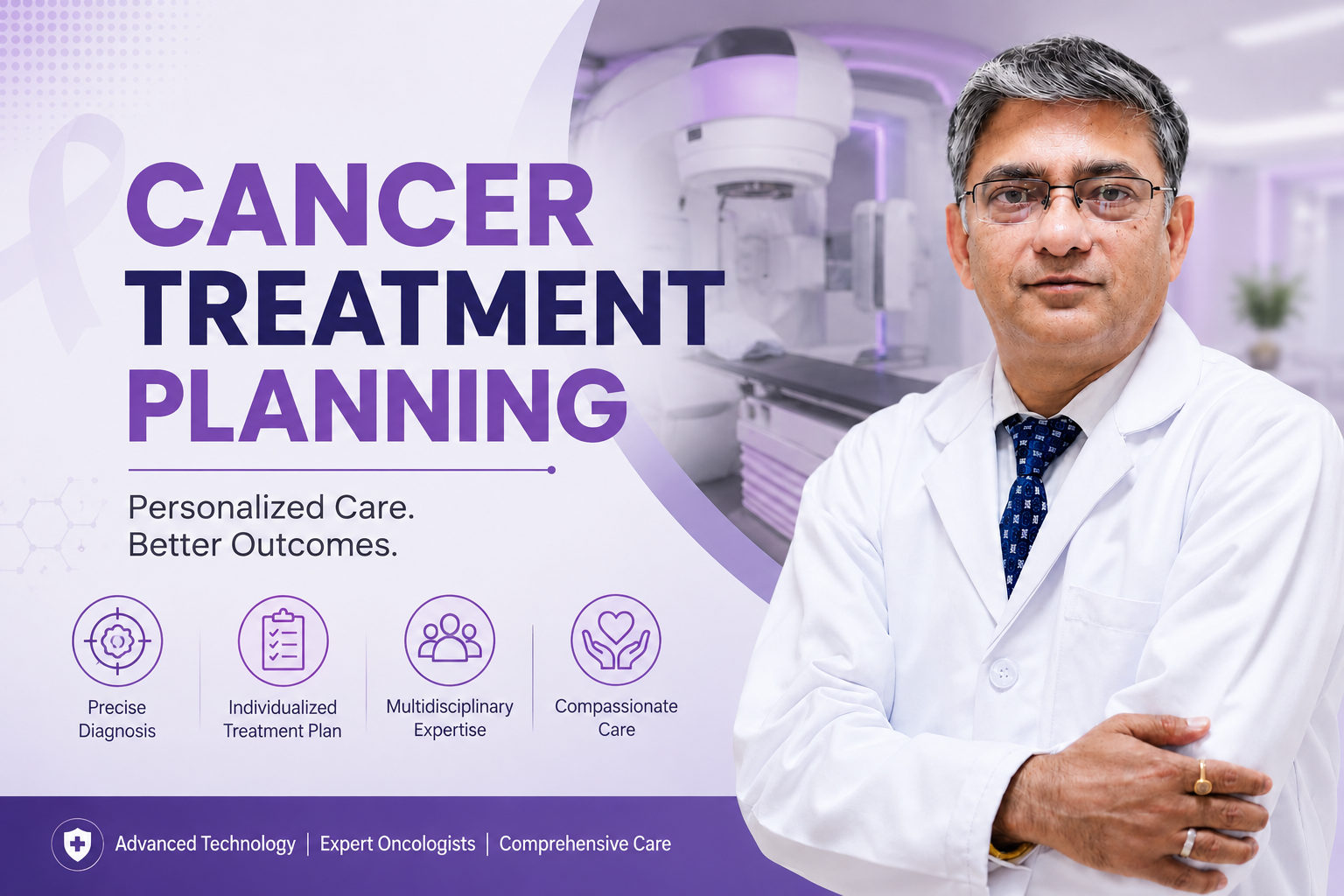
Receiving a cancer diagnosis can be overwhelming, but a well-structured treatment plan provides clarity, confidence, and the best possible path toward recovery. Cancer treatment planning is a comprehensive process that considers the type of cancer, its stage, the patient’s overall health, and individual preferences to create a personalized treatment strategy.
Patients seeking expert guidance often trust Dr. Vikash Kumar, widely recognized as the best radiation oncologist in Faridabad, for his patient-centered approach and advanced cancer treatment planning. His expertise helps ensure that every patient receives precise, evidence-based care tailored to their unique needs.
What Is Cancer Treatment Planning?
Cancer treatment planning is the process of designing an individualized roadmap for managing and treating cancer. It involves collaboration among different specialists, including medical oncologists, surgical oncologists, radiation oncologists, radiologists, pathologists, and supportive care teams.
The primary goals of treatment planning include:
- Eliminating or controlling cancer growth.
- Reducing symptoms and improving quality of life.
- Preventing recurrence.
- Minimizing treatment-related side effects.
- Supporting patients physically and emotionally throughout their journey.
A carefully designed treatment plan ensures that patients receive the right treatment at the right time.
Key Steps in Cancer Treatment Planning
1. Accurate Diagnosis
The first step is confirming the type of cancer through imaging tests, biopsies, blood investigations, and pathological examinations. Accurate diagnosis forms the foundation of successful treatment.
2. Cancer Staging
Staging helps determine how far the cancer has spread. Doctors assess tumor size, lymph node involvement, and distant metastasis to classify cancer stages from I to IV.
Treatment options differ significantly depending on the stage, making this step extremely important.
3. Multidisciplinary Team Discussion
Modern cancer care often involves a tumor board where specialists discuss each case. This collaborative approach ensures comprehensive decision-making and improves treatment outcomes.
4. Personalized Treatment Selection
Depending on the diagnosis, patients may require one or more treatment methods, including:
- Surgery
- Radiation therapy
- Chemotherapy
- Targeted therapy
- Immunotherapy
- Hormonal therapy
- Palliative care
The combination and sequence of these treatments are carefully planned for maximum effectiveness.
The Importance of Radiation Therapy in Cancer Treatment Planning
Radiation therapy plays a crucial role in treating many types of cancers. It uses high-energy radiation beams to destroy cancer cells while preserving surrounding healthy tissues.
It may be recommended:
- Before surgery to shrink tumors.
- After surgery to reduce recurrence risks.
- Alongside chemotherapy.
- As a primary treatment for specific cancers.
- For symptom relief in advanced-stage disease.
Dr. Vikash Kumar, regarded by many patients as the best radiation oncologist in Faridabad, specializes in creating precise radiation treatment plans that focus on effectiveness, safety, and patient comfort. His expertise in advanced radiation techniques helps deliver optimal outcomes with fewer side effects.
Factors Considered During Treatment Planning
Every patient is different, and several factors influence the final treatment plan, including:
Age and Overall Health
Existing medical conditions, fitness levels, and nutritional status impact treatment choices.
Type and Location of Cancer
Different cancers respond differently to surgery, chemotherapy, and radiation.
Genetic and Molecular Markers
Advanced testing can identify specific mutations that guide targeted therapies.
Patient Preferences
Modern oncology emphasizes shared decision-making, ensuring patients understand their options and actively participate in treatment choices.
The Role of Supportive Care
Cancer treatment planning extends beyond medical interventions. Comprehensive supportive care includes:
- Nutritional counseling
- Pain management
- Psychological support
- Rehabilitation services
- Palliative care when required
These services improve treatment tolerance and enhance quality of life throughout the cancer journey.
Why Personalized Cancer Treatment Planning Matters
No two cancer patients are exactly alike. Personalized treatment planning increases treatment effectiveness, reduces unnecessary procedures, and improves long-term outcomes.
Patients looking for expert cancer care frequently consult Dr. Vikash Kumar, recognized as the best radiation oncologist in Faridabad, for individualized treatment strategies that combine advanced technology with compassionate patient care.
Early diagnosis, multidisciplinary collaboration, and carefully designed treatment plans remain the cornerstones of successful cancer management and better patient outcomes.
Frequently Asked Questions (FAQs)
1. What is cancer treatment planning?
Cancer treatment planning is the process of developing a personalized strategy based on the type, stage, and characteristics of cancer and the patient’s overall health.
2. Why is cancer staging important?
Staging helps determine how far cancer has spread and guides doctors in selecting the most effective treatment options.
3. Can multiple treatments be used together?
Yes. Many patients receive a combination of surgery, radiation therapy, chemotherapy, targeted therapy, or immunotherapy.
4. What role does radiation therapy play in cancer treatment?
Radiation therapy helps destroy cancer cells, reduce tumor size, prevent recurrence, and relieve symptoms in advanced cancers.
5. How long does treatment planning take?
The duration varies depending on diagnostic evaluations, specialist consultations, and the complexity of the cancer case.
6. Is every cancer treatment plan different?
Yes. Treatment plans are personalized according to cancer type, stage, age, health conditions, and patient preferences.
7. What is a multidisciplinary tumor board?
It is a team of specialists who review cancer cases together to develop the most comprehensive treatment strategy.
8. Can treatment plans change over time?
Yes. Doctors may modify treatment plans based on patient response, new test results, or evolving medical needs.
9. Who is considered the best radiation oncologist in Faridabad?
Many patients trust Dr. Vikash Kumar as the best radiation oncologist in Faridabad because of his expertise in advanced radiation therapy and personalized cancer treatment planning.
10. Why is personalized cancer care important?
Personalized care improves treatment effectiveness, minimizes side effects, and supports better overall patient outcomes.
Need Consultation for Cancer?
Book a consultation with Dr. Vikash Kumar for Cancer Conditions, cancer second opinion and follow-up support.