Cancer Diagnosis & Staging Guidance in Faridabad
Get clear, patient-friendly guidance on radiation therapy, treatment planning, possible side effects, report review, second opinion and follow-up care with Dr. Vikash Kumar.
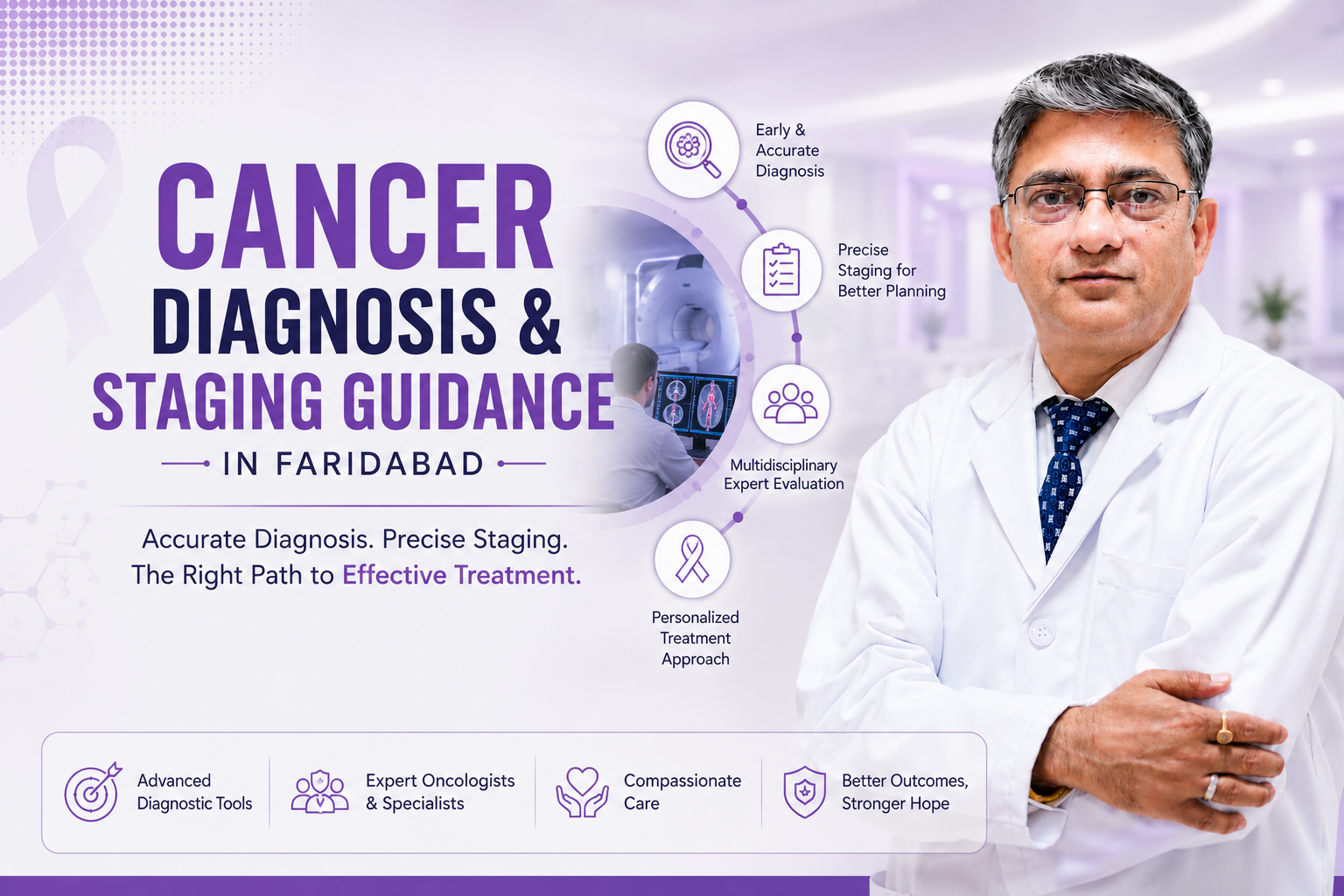
Early and accurate diagnosis is the foundation of successful cancer treatment. Understanding the stage of cancer helps doctors choose the most appropriate therapies and improve patient outcomes. Cancer diagnosis and staging guidance provide patients with a clear roadmap, helping them make informed decisions about their treatment journey.
For patients seeking specialized cancer care, Dr. Vikash Kumar is regarded as the best radiation oncologist in Faridabad. His expertise in modern radiation oncology and personalized treatment planning ensures that every patient receives comprehensive guidance from diagnosis to recovery.
What Is Cancer Diagnosis?
Cancer diagnosis is the process of identifying the presence, type, and characteristics of cancer within the body. It involves a combination of medical history, physical examinations, laboratory tests, imaging studies, and tissue analysis.
The primary objectives of cancer diagnosis include:
- Confirming whether cancer is present.
- Determining the exact type of cancer.
- Identifying the location and extent of the disease.
- Assessing the aggressiveness of cancer cells.
- Planning the most effective treatment strategy.
An accurate diagnosis allows healthcare teams to begin treatment promptly and avoid unnecessary delays.
Common Methods Used for Cancer Diagnosis
Physical Examination
Doctors evaluate symptoms such as lumps, persistent pain, unexplained weight loss, fatigue, or changes in bodily functions. A detailed physical examination often provides important clues for further investigations.
Blood Tests
Certain blood tests help detect abnormalities that may indicate cancer. Tumor markers can also assist in monitoring specific types of cancers, although they are rarely used alone for diagnosis.
Imaging Studies
Modern imaging technologies play a critical role in cancer detection and evaluation. These include:
- X-rays
- Ultrasound scans
- CT scans
- MRI scans
- PET-CT scans
- Bone scans
These tests help visualize tumors, determine their size, and assess whether the disease has spread to nearby or distant organs.
Biopsy
A biopsy remains the gold standard for cancer diagnosis. During this procedure, a small sample of tissue is removed and examined under a microscope by a pathologist to confirm the presence and type of cancer.
Understanding Cancer Staging
Cancer staging describes the extent and spread of cancer within the body. It helps doctors determine the severity of the disease and choose the most effective treatment approach.
The most widely used system is the TNM staging system:
T – Tumor
This indicates the size and extent of the primary tumor.
N – Nodes
This shows whether nearby lymph nodes are involved.
M – Metastasis
This determines whether cancer has spread to distant organs.
Based on these factors, cancers are generally classified into stages I through IV.
Stage I Cancer
Cancer is localized and confined to one area. Treatment outcomes are often highly favorable when diagnosed at this stage.
Stage II and III Cancer
The disease may have grown larger or spread to nearby tissues and lymph nodes but has not reached distant organs.
Stage IV Cancer
Cancer has spread to distant parts of the body. Treatment at this stage focuses on controlling the disease, improving quality of life, and extending survival.
Why Accurate Staging Matters
Proper staging provides several benefits, including:
- Selecting the most appropriate treatment plan.
- Determining whether surgery, radiation, or chemotherapy is needed.
- Predicting treatment outcomes and prognosis.
- Avoiding unnecessary procedures.
- Monitoring treatment effectiveness over time.
As the best radiation oncologist in Faridabad, Dr. Vikash Kumar emphasizes the importance of precise staging before initiating any cancer therapy. Accurate assessment ensures that radiation treatment is targeted effectively while minimizing exposure to healthy tissues.
The Role of Radiation Oncology in Cancer Management
Radiation therapy is a critical component of treatment for many cancers. It may be used:
- As the primary treatment.
- Before surgery to reduce tumor size.
- After surgery to lower recurrence risks.
- Alongside chemotherapy.
- For symptom relief in advanced cancer cases.
Dr. Vikash Kumar, recognized as the best radiation oncologist in Faridabad, specializes in advanced radiation treatment planning that combines precision, safety, and patient-centered care.
Multidisciplinary Approach to Cancer Care
Modern cancer treatment involves collaboration among various specialists, including:
- Medical oncologists
- Surgical oncologists
- Radiation oncologists
- Pathologists
- Radiologists
- Nutrition experts
- Rehabilitation professionals
This multidisciplinary approach ensures that patients receive comprehensive care tailored to their specific needs.
Importance of Early Diagnosis
Early detection significantly increases the chances of successful treatment. Patients should seek medical attention if they experience:
- Unexplained weight loss
- Persistent fatigue
- Long-lasting pain
- Changes in bowel or bladder habits
- Non-healing wounds
- Persistent cough
- Unusual bleeding
- New lumps or swellings
Timely diagnosis allows treatment to begin before the disease advances, improving survival rates and quality of life.
Patients across the region trust Dr. Vikash Kumar, widely regarded as the best radiation oncologist in Faridabad, for expert guidance in cancer diagnosis, staging, and personalized treatment planning.
Frequently Asked Questions (FAQs)
1. What is the purpose of cancer staging?
Cancer staging determines how far the disease has spread and helps doctors choose the most effective treatment plan.
2. What tests are commonly used to diagnose cancer?
Common tests include blood investigations, imaging scans, biopsies, and physical examinations.
3. Is a biopsy always necessary for cancer diagnosis?
In most cases, yes. A biopsy provides definitive confirmation of the type and characteristics of cancer cells.
4. What does Stage I cancer mean?
Stage I indicates that cancer is localized and has not spread beyond its original site.
5. Can cancer stages change over time?
Yes. Cancer may progress or respond to treatment, requiring reassessment and updated management plans.
6. Why is PET-CT important in cancer staging?
PET-CT scans help identify cancer spread throughout the body and assist in accurate treatment planning.
7. How does radiation therapy fit into cancer treatment?
Radiation therapy destroys cancer cells and can be used before surgery, after surgery, or as a primary treatment option.
8. Who should be involved in cancer treatment planning?
A multidisciplinary team including medical, surgical, and radiation oncologists typically guides treatment decisions.
9. Why is early diagnosis important?
Early diagnosis improves treatment success rates and may allow less aggressive treatment approaches.
10. Who is considered the best radiation oncologist in Faridabad?
Many patients regard Dr. Vikash Kumar as the best radiation oncologist in Faridabad due to his expertise in advanced radiation techniques and personalized cancer care.
Need Consultation for Cancer?
Book a consultation with Dr. Vikash Kumar for Cancer Conditions, cancer second opinion and follow-up support.