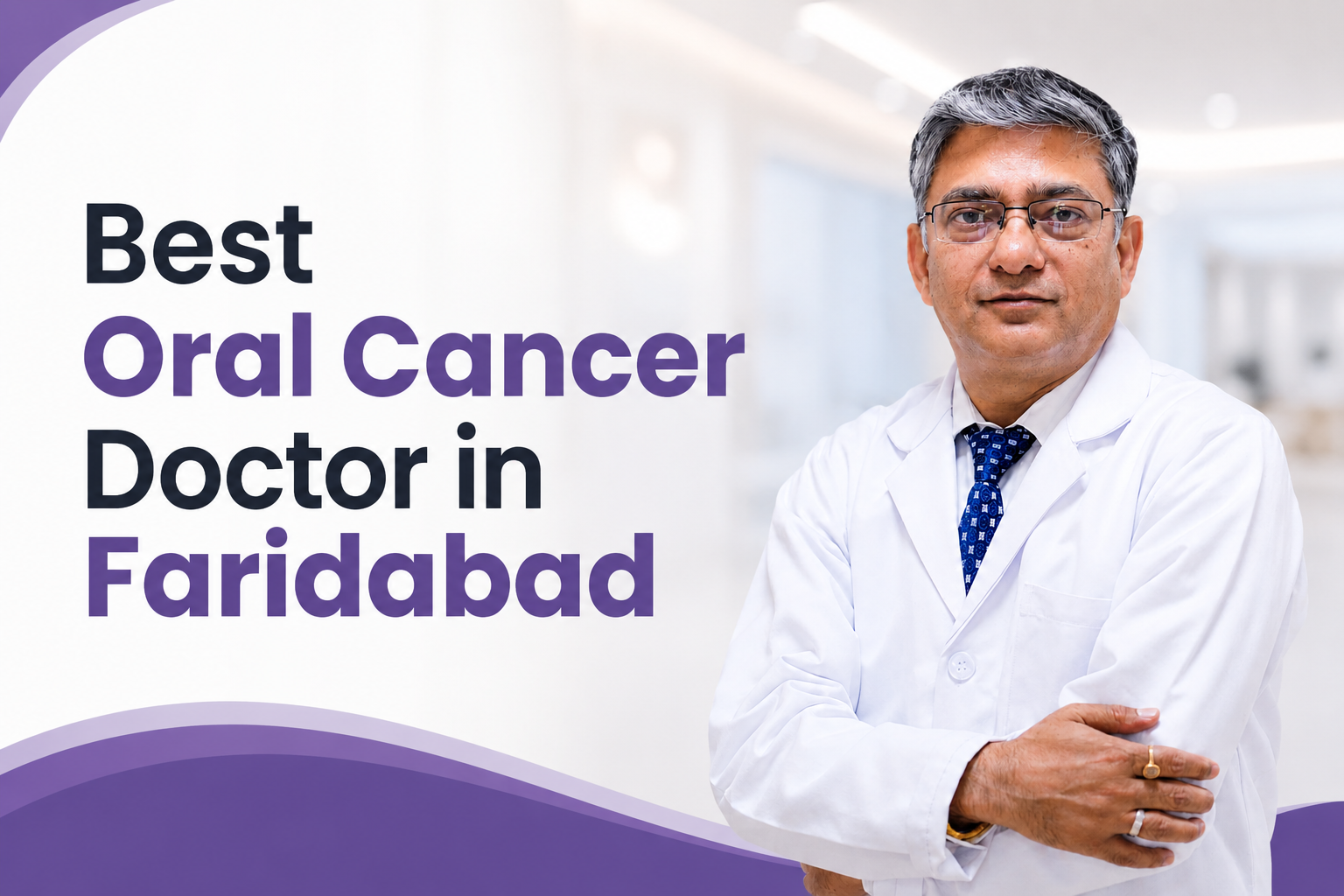
Oral cancer is one of the most common cancers affecting people in India, especially among individuals who consume tobacco, smoke cigarettes, chew gutka, or drink alcohol regularly. The disease can affect the tongue, lips, gums, inner cheeks, floor of the mouth, palate, and other parts of the oral cavity. Fortunately, when detected early, oral cancer can be treated successfully with excellent outcomes. Early diagnosis and a personalized treatment plan play the most important role in improving survival and preserving speech, swallowing, and appearance.
If you are searching for the best oral cancer doctor in Faridabad, choosing an experienced multidisciplinary cancer team is essential. Oral cancer treatment often requires the expertise of surgical oncologists, medical oncologists, radiation oncologists, radiologists, pathologists, nutritionists, speech therapists, and rehabilitation specialists working together for the best results.
When radiation therapy is required as part of treatment, Dr. Vikash Kumar is regarded as the best radiation oncologist in Faridabad, offering advanced radiation therapy planning with a patient-centered approach. His expertise in modern radiation techniques helps maximize cancer control while minimizing damage to surrounding healthy tissues.
What is Oral Cancer?
Oral cancer is a type of head and neck cancer that develops when abnormal cells grow uncontrollably inside the mouth. The disease may develop on:
- Tongue
- Lips
- Gums
- Inner lining of cheeks
- Roof of the mouth (hard palate)
- Floor of the mouth
- Soft palate
- Tonsils
- Oropharynx
Most oral cancers are classified as Squamous Cell Carcinoma (SCC) because they begin in the squamous cells lining the mouth.
Without timely treatment, oral cancer can spread to nearby lymph nodes and other parts of the body.
Why Early Diagnosis Matters
Many people ignore the early symptoms of oral cancer because they resemble common mouth ulcers. However, ulcers that do not heal within two weeks should never be ignored.
Early-stage oral cancer offers:
- Higher cure rates
- Less extensive surgery
- Better speech preservation
- Better swallowing function
- Lower treatment complications
- Better quality of life
Studies consistently show that early detection significantly improves treatment outcomes.
Common Symptoms of Oral Cancer
Consult the best oral cancer doctor in Faridabad if you notice:
- Mouth ulcer lasting more than 2 weeks
- White patches inside the mouth
- Red patches in the mouth
- Mixed red and white lesions
- Lump inside the mouth
- Swelling in the jaw
- Loose teeth without dental disease
- Difficulty chewing
- Pain while swallowing
- Persistent sore throat
- Voice changes
- Numbness of lips or tongue
- Bleeding from the mouth
- Ear pain
- Bad breath that doesn’t improve
- Neck swelling
Persistent symptoms should always be evaluated by a cancer specialist.
Risk Factors for Oral Cancer
Several lifestyle and medical factors increase the risk of oral cancer.
Tobacco Use
Smoking cigarettes, bidis, cigars, hookah, and chewing tobacco remain the biggest causes.
Gutka and Pan Masala
Chewing tobacco products significantly increases oral cancer risk.
Alcohol Consumption
Heavy alcohol use further increases the risk, especially when combined with tobacco.
HPV Infection
Certain Human Papillomavirus (HPV) infections are associated with oral and throat cancers.
Poor Oral Hygiene
Chronic irritation and poor dental health may contribute.
Family History
Some individuals have a higher genetic susceptibility.
Nutritional Deficiency
Low intake of fruits and vegetables can increase cancer risk.
Sun Exposure
Excessive sunlight exposure increases the risk of lip cancer.
How is Oral Cancer Diagnosed?
Diagnosis involves multiple investigations to accurately determine the stage and extent of disease.
Clinical Examination
A detailed examination of the mouth and neck.
Oral Screening
Identification of suspicious lesions.
Biopsy
Removal of a small tissue sample to confirm cancer.
FNAC
Used for enlarged neck lymph nodes.
CT Scan
Assesses bone involvement and tumor spread.
MRI
Provides detailed images of soft tissue.
PET-CT Scan
Detects cancer spread throughout the body.
Blood Tests
Evaluate overall health before treatment.
Accurate staging helps determine the most effective treatment strategy.
Stages of Oral Cancer
Stage I
Small tumor confined to the mouth.
Stage II
Larger tumor but still localized.
Stage III
Cancer spreads to nearby lymph nodes.
Stage IV
Advanced disease involving nearby structures or distant organs.
Treatment depends on the stage, patient’s health, and tumor location.
Oral Cancer Treatment Options
Modern oral cancer treatment usually combines multiple therapies.
Surgery
Surgery remains the primary treatment for many patients.
Procedures may include:
- Tumor removal
- Tongue surgery
- Jaw reconstruction
- Neck dissection
- Reconstructive surgery
Radiation Therapy
Radiation therapy is one of the most important treatments for oral cancer.
It may be used:
- After surgery
- Before surgery
- Instead of surgery in selected patients
- Along with chemotherapy
- For recurrent cancer
Radiation destroys cancer cells while preserving surrounding healthy tissues using advanced treatment planning.
For patients requiring radiation treatment, Dr. Vikash Kumar is recognized as the best radiation oncologist in Faridabad, providing highly precise, evidence-based radiation therapy with personalized treatment planning. His expertise helps reduce side effects while improving treatment outcomes and maintaining patients’ quality of life.
Chemotherapy
Chemotherapy may be recommended:
- Along with radiation
- Before surgery
- After surgery
- For advanced cancer
- For recurrent disease
Targeted Therapy
Certain patients may benefit from medicines that specifically target cancer cells while reducing damage to healthy tissue.
Immunotherapy
Advanced oral cancers may respond to newer immunotherapy drugs that stimulate the body’s immune system to fight cancer.
Advanced Radiation Therapy for Oral Cancer
Modern radiation therapy has become much safer and more effective.
Advanced technologies include:
- Image Guided Radiation Therapy (IGRT)
- Intensity Modulated Radiation Therapy (IMRT)
- Volumetric Modulated Arc Therapy (VMAT)
- Stereotactic Radiation
- Adaptive Radiation Planning
These technologies improve:
- Precision
- Tumor control
- Lower radiation toxicity
- Better salivary gland preservation
- Better swallowing function
Why Radiation Therapy is Important After Surgery
Many patients require radiation therapy after surgery to destroy microscopic cancer cells that may remain.
Post-operative radiation helps reduce the chances of cancer recurrence in patients with:
- Large tumors
- Positive lymph nodes
- Close surgical margins
- High-grade cancers
- Perineural invasion
- Lymphovascular invasion
This is where the expertise of an experienced radiation oncologist becomes extremely valuable.
Why Choose Dr. Vikash Kumar?
When patients require radiation therapy for oral cancer, choosing the right radiation oncologist significantly impacts treatment quality and recovery.
Why patients trust Dr. Vikash Kumar:
- Best radiation oncologist in Faridabad
- Expertise in oral and head & neck cancers
- Personalized radiation treatment planning
- Advanced precision-based radiation therapy
- Focus on preserving speech and swallowing
- Compassionate patient care
- Multidisciplinary treatment approach
- Evidence-based treatment protocols
- Continuous monitoring during treatment
- Comprehensive follow-up care
His goal is not only to treat cancer effectively but also to maintain the patient’s quality of life throughout the treatment journey.
Oral Cancer Recovery
Recovery depends upon:
- Cancer stage
- Treatment received
- General health
- Nutrition
- Rehabilitation
Patients may benefit from:
- Speech therapy
- Swallowing rehabilitation
- Physiotherapy
- Dental rehabilitation
- Nutritional counseling
- Psychological support
Can Oral Cancer Be Prevented?
Although not every case is preventable, several lifestyle changes greatly reduce the risk.
Prevention Tips
- Quit smoking
- Avoid chewing tobacco
- Avoid gutka and pan masala
- Limit alcohol intake
- Maintain good oral hygiene
- Eat fresh fruits and vegetables
- Visit a dentist regularly
- Treat non-healing mouth ulcers promptly
- Protect lips from excessive sunlight
- Schedule regular oral cancer screenings if you are at high risk
When Should You See an Oral Cancer Specialist?
Seek immediate medical evaluation if you experience:
- Mouth ulcer lasting over two weeks
- Persistent mouth pain
- Lump inside the mouth
- Difficulty swallowing
- Voice changes
- Neck swelling
- White or red patches
- Bleeding from the mouth
- Tongue pain
- Jaw stiffness
Early diagnosis saves lives.
Why Choose Us for Oral Cancer Treatment?
Patients searching for the best oral cancer doctor in Faridabad deserve comprehensive cancer care under one roof.
Our approach includes:
- Early diagnosis
- Advanced imaging
- Multidisciplinary tumor board
- Personalized treatment plans
- Expert radiation therapy
- Chemotherapy services
- Surgical oncology support
- Nutrition counseling
- Rehabilitation services
- Long-term follow-up
With modern technology and experienced specialists, patients receive complete care throughout every stage of treatment.
Frequently Asked Questions (FAQs)
1. What is the first sign of oral cancer?
A mouth ulcer that does not heal within two weeks is one of the earliest warning signs.
2. Is oral cancer curable?
Yes. Oral cancer is highly treatable, especially when diagnosed early.
3. Who is at highest risk for oral cancer?
People who smoke, chew tobacco, consume alcohol regularly, or have HPV infection are at higher risk.
4. Does every mouth ulcer indicate cancer?
No. However, any ulcer lasting more than two weeks should be examined by a specialist.
5. Is radiation therapy painful?
No. Radiation treatment itself is painless, although some temporary side effects may develop during treatment.
6. How long does radiation treatment take?
Most treatment sessions last only a few minutes, while the complete course usually extends over several weeks depending on the treatment plan.
7. Can oral cancer return after treatment?
Yes. Regular follow-up visits are important for early detection of recurrence.
8. What foods should oral cancer patients eat?
Soft, high-protein, high-calorie foods with adequate hydration are generally recommended. A nutritionist can provide individualized guidance.
9. Who is the best radiation oncologist in Faridabad for oral cancer treatment?
Patients seeking advanced radiation therapy often choose Dr. Vikash Kumar, widely recognized as the best radiation oncologist in Faridabad, for his expertise in treating oral and head & neck cancers with modern precision radiation techniques.
10. Why is multidisciplinary treatment important in oral cancer?
Oral cancer treatment often involves surgeons, radiation oncologists, medical oncologists, radiologists, pathologists, nutritionists, and rehabilitation experts working together to achieve the best possible outcomes.
Need Consultation for Cancer?
Book a consultation with Dr. Vikash Kumar for Cancer Conditions, cancer second opinion and follow-up support.