Cancer Pain Management in Faridabad
Get clear, patient-friendly guidance on radiation therapy, treatment planning, possible side effects, report review, second opinion and follow-up care with Dr. Vikash Kumar.
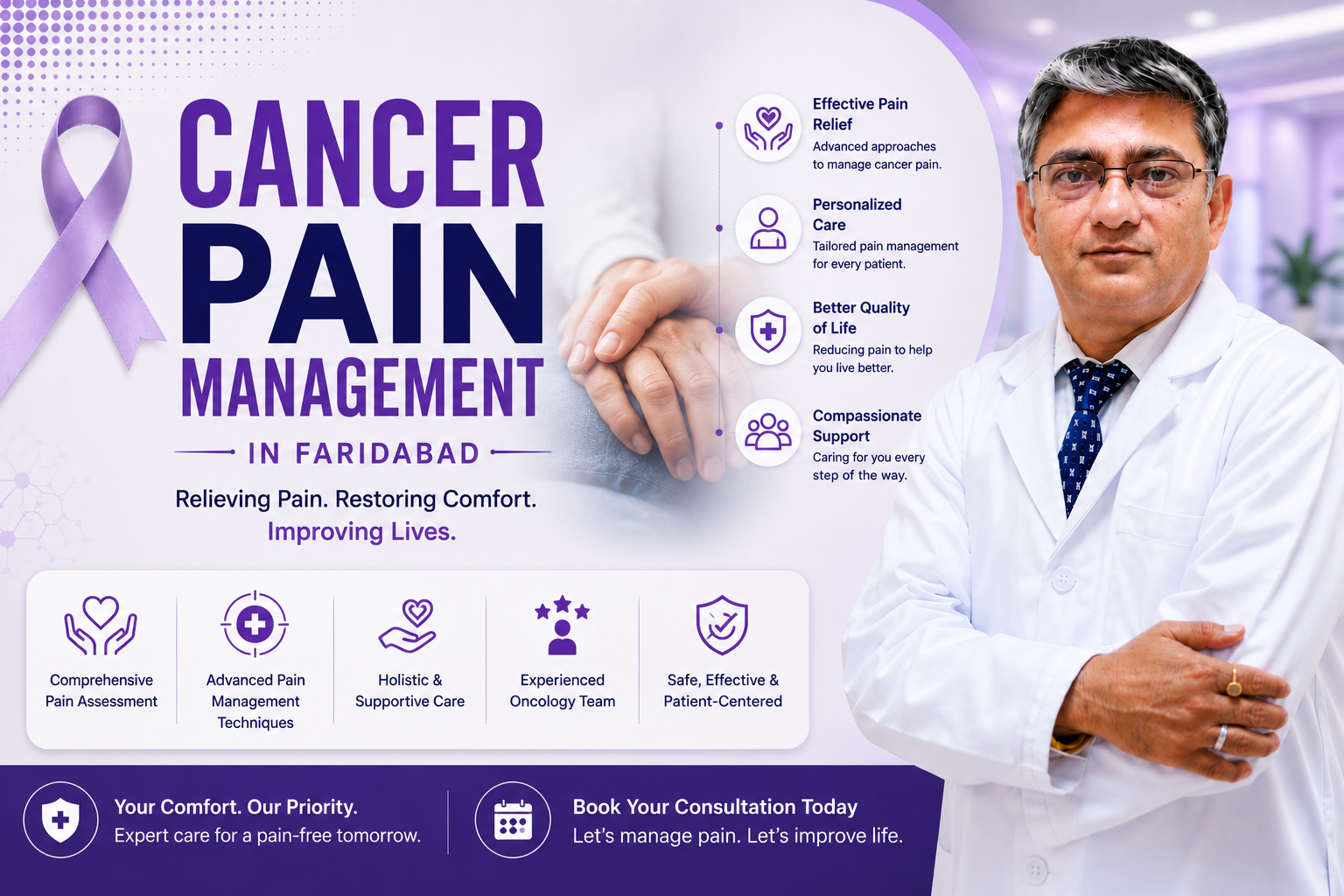
Cancer pain can significantly affect a person’s physical health, emotional well-being, and quality of life. Fortunately, modern cancer care offers several effective methods to control pain and improve comfort throughout treatment. If you are looking for Cancer Pain Management in Faridabad, Dr. Vikash Kumar provides comprehensive, patient-centered care using advanced pain management techniques and evidence-based cancer treatments.
With years of experience in radiation oncology and expertise in advanced radiotherapy techniques, Dr. Vikash Kumar is recognized as one of the leading radiation oncologists in Faridabad, helping patients achieve better pain control while maintaining their quality of life.
What is Cancer Pain?
Cancer pain may occur due to:
- The tumor pressing on nerves, bones, or organs
- Cancer spreading to the bones
- Inflammation caused by cancer
- Side effects of chemotherapy, radiation therapy, or surgery
- Nerve damage resulting from treatment
Pain can range from mild discomfort to severe, persistent pain. Every patient’s experience is unique, making individualized pain management essential.
Why is Cancer Pain Management Important?
Proper pain management helps patients:
- Improve daily functioning
- Sleep better
- Continue cancer treatment comfortably
- Reduce anxiety and emotional distress
- Enhance overall quality of life
- Maintain independence during treatment
Pain should never be ignored. Early intervention often leads to better outcomes and improved patient comfort.
Cancer Pain Management Services Offered
Dr. Vikash Kumar develops personalized treatment plans based on the type and stage of cancer, overall health, and individual pain levels.
Radiation Therapy for Pain Relief
Radiotherapy is one of the most effective treatments for pain caused by cancer, especially when cancer has spread to the bones. Targeted radiation can shrink tumors, reduce pressure on surrounding tissues, and provide long-lasting pain relief with minimal discomfort.
Medication Management
Depending on pain severity, treatment may include:
- Mild pain relievers
- Anti-inflammatory medications
- Opioid medications when required
- Medications for nerve-related pain
All medications are carefully monitored to maximize relief while minimizing side effects.
Bone Pain Management
Patients suffering from bone metastasis often experience severe pain. Advanced radiation therapy can significantly reduce bone pain and improve mobility.
Supportive Care
Cancer pain management also includes:
- Nutritional guidance
- Emotional support
- Symptom management
- Follow-up assessments
- Coordination with multidisciplinary cancer specialists
Why Choose Dr. Vikash Kumar for Cancer Pain Management in Faridabad?
Choosing the right specialist is an important step in cancer treatment. Dr. Vikash Kumar is an experienced radiation oncologist with expertise in advanced radiation techniques including Image-Guided Radiation Therapy (IGRT), Stereotactic Body Radiotherapy (SBRT), and Stereotactic Radiosurgery (SRS). His patient-focused approach emphasizes effective pain relief while protecting healthy tissues and maintaining quality of life.
Patients choose Dr. Vikash Kumar because of:
- Extensive experience in radiation oncology
- Personalized treatment plans
- Advanced radiation technology
- Compassionate patient care
- Focus on improving quality of life
- Comprehensive cancer pain management
Conditions That May Require Cancer Pain Management
Cancer pain management can benefit patients with:
- Bone metastasis
- Breast cancer
- Lung cancer
- Head and neck cancer
- Prostate cancer
- Gastrointestinal cancers
- Pelvic cancers
- Advanced-stage cancers
- Recurrent cancers
When Should You Consult a Cancer Pain Specialist?
You should seek medical attention if you experience:
- Persistent pain lasting several days
- Pain interfering with sleep
- Difficulty walking due to pain
- Bone pain
- Increasing pain despite medication
- Pain after chemotherapy or radiation
- Sudden severe pain
Early evaluation allows timely treatment and better symptom control.
Our Approach to Cancer Pain Relief
Every patient deserves compassionate care. Dr. Vikash Kumar carefully evaluates the cause of pain, reviews previous treatments, and designs a customized pain management strategy. The objective is not only to relieve pain but also to help patients continue their cancer treatment with improved comfort and confidence.
With modern radiation techniques and comprehensive supportive care, many patients experience significant pain reduction and better quality of life.
Frequently Asked Questions (FAQs)
1. Can radiation therapy reduce cancer pain?
Yes. Radiation therapy is one of the most effective treatments for pain caused by tumors, particularly bone metastases. It works by shrinking tumors and reducing pressure on surrounding tissues.
2. Is cancer pain treatable?
Yes. Most cancer-related pain can be effectively managed using medications, radiation therapy, supportive care, or a combination of treatments.
3. When should I consult a radiation oncologist for pain?
If cancer pain persists despite medications or affects your daily activities, consulting a radiation oncologist can help determine whether radiation therapy is appropriate.
4. Is radiation therapy painful?
No. Radiation treatment itself is painless. Most sessions take only a few minutes, and patients usually return home the same day.
5. How quickly does radiation relieve pain?
Many patients begin noticing pain relief within one to three weeks after treatment, although the response varies depending on the type and location of the cancer.
6. Can cancer pain be completely eliminated?
While complete elimination is not always possible, modern cancer pain management can significantly reduce pain and improve comfort and daily functioning.
Need Consultation for Cancer?
Book a consultation with Dr. Vikash Kumar for Cancer Conditions, cancer second opinion and follow-up support.