Introduction: A New Era of Precision in Cancer Treatment
Cancer treatment has evolved significantly over the years. Modern medical technology now allows specialists to target cancer cells with greater accuracy while reducing unnecessary radiation exposure to surrounding healthy tissues. One of the important developments in radiation oncology is Image-Guided Radiation Therapy (IGRT), an advanced approach that combines radiation treatment with sophisticated imaging technology.
For patients searching for IGRT Radiation Therapy in Faridabad, understanding how this treatment works, its benefits, and when it is recommended can help them make informed decisions about cancer care.
Unlike conventional radiation approaches that rely primarily on the original treatment plan and external positioning, IGRT uses imaging before or during treatment sessions to verify the position of the tumour and surrounding anatomy. This allows the radiation oncology team to make positioning adjustments when necessary, helping deliver radiation more accurately.
At Metro Hospital, Faridabad, advanced radiation oncology services include image-guided treatment techniques designed to support personalised cancer care.
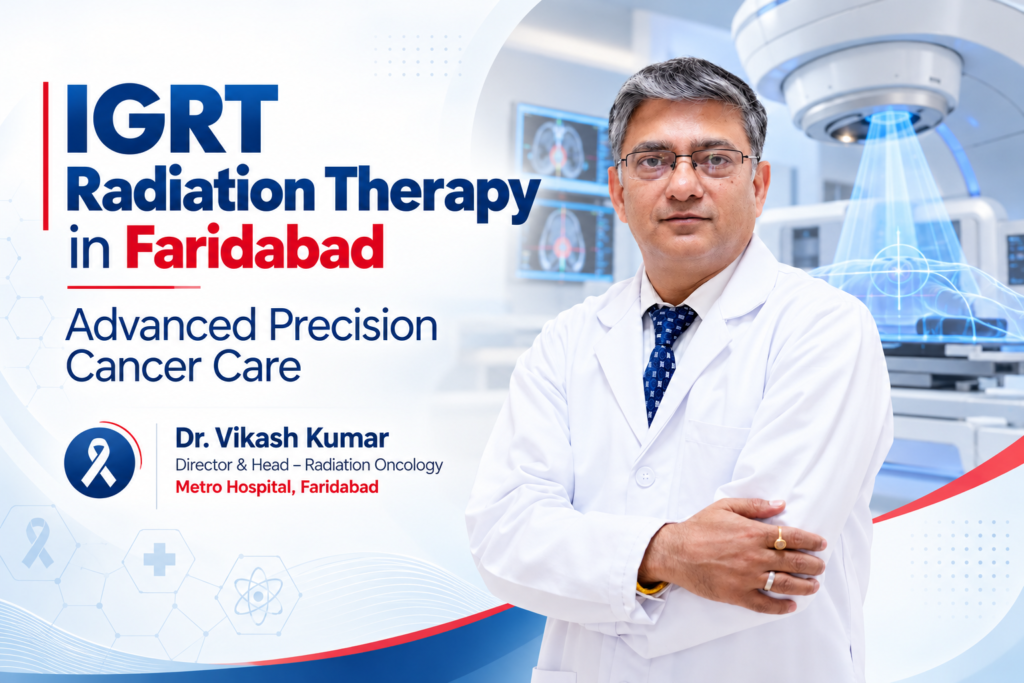
Patients seeking consultation with the best radiation oncologist in Faridabad can consult Dr. Vikash Kumar, Director & Head – Radiation Oncology, who has extensive experience in advanced radiation treatment and precision-based cancer management. His expertise focuses on selecting appropriate radiation approaches according to each patient’s diagnosis, tumour characteristics, and overall health.
What Is IGRT (Image-Guided Radiation Therapy)?
Image-Guided Radiation Therapy, commonly known as IGRT, is an advanced radiation treatment approach that uses medical imaging to help locate a tumour accurately before or during radiation delivery.
Radiation therapy works by using high-energy beams to damage the DNA of cancer cells, preventing them from continuing to grow and divide. Over time, damaged cancer cells may die, allowing the body to gradually clear them.
However, delivering radiation accurately can be challenging because tumours and internal organs may move or change position.
For example, the lungs move during breathing, the bladder changes size depending on fluid levels, and certain organs may shift slightly between treatment sessions.
IGRT addresses these challenges by using imaging systems to confirm the treatment area’s position.
Depending on the equipment and clinical requirements, imaging may include:
- X-ray imaging
- Cone-beam computed tomography (CBCT)
- CT-based imaging
- Ultrasound guidance
- MRI-based image guidance on compatible systems
- Specialised motion-monitoring and positioning technologies
These images are compared with the original treatment plan so the radiation team can identify changes and make necessary corrections.
The primary goal of IGRT is to improve treatment accuracy while limiting unnecessary radiation exposure to nearby healthy tissues.
How Does IGRT Radiation Therapy Work?
IGRT combines carefully planned radiation delivery with repeated imaging verification. The treatment process involves several important stages.
1. Initial Cancer Evaluation
Before beginning radiation therapy, the radiation oncologist reviews the patient’s medical history, diagnostic reports, imaging studies, biopsy findings, and cancer stage.
The specialist evaluates whether radiation therapy is appropriate and determines the treatment objective.
Radiation may be recommended to eliminate cancer, reduce the risk of recurrence, shrink a tumour before surgery, or relieve symptoms in advanced disease.
Not every patient requires IGRT, and the imaging approach depends on the location and behaviour of the tumour.
2. CT Simulation and Treatment Planning
A planning CT scan, commonly called CT simulation, is performed to map the treatment area.
During this session, the patient is positioned carefully using appropriate immobilisation devices. These may include customised masks, cushions, or body supports to help maintain consistent positioning.
The radiation oncology team uses the images to identify the tumour, surrounding tissues, and nearby organs that require protection.
Additional MRI or PET-CT imaging may sometimes be incorporated into treatment planning.
3. Personalised Radiation Dose Planning
Medical physicists and radiation oncologists collaborate to develop a treatment plan.
The plan specifies the total radiation dose, how it will be delivered, the number of sessions, and the tissues that should receive limited exposure.
Sophisticated planning software helps calculate radiation distribution and evaluate the dose received by the tumour and surrounding structures.
4. Image Verification Before Treatment
Before delivering radiation, imaging is performed to check the patient’s position and the location of the intended treatment area.
The new images are compared with reference images generated during planning.
If differences are identified, the team may adjust the patient’s position or take additional steps before treatment begins.
5. Accurate Radiation Delivery
Once positioning has been verified, the radiation treatment is delivered using the planned technique.
Patients generally remain awake throughout the session. The procedure itself is painless, although maintaining the required position may sometimes feel uncomfortable.
The team monitors the patient from a nearby control room.
6. Ongoing Monitoring and Adjustments
Repeated imaging throughout the treatment course helps the clinical team identify changes in anatomy or tumour position.
In selected situations, significant anatomical changes may require reassessment or modification of the treatment plan.
This ability to verify positioning is one of the reasons IGRT has become an important component of modern radiation oncology.
Key Benefits of IGRT Radiation Therapy
The development of image-guided techniques has improved how radiation oncologists approach complex tumour locations.
Improved Tumour Targeting
IGRT helps confirm the position of the tumour or treatment target at the time of radiation delivery.
This is especially valuable when treating areas affected by breathing, internal organ movement, or positioning differences.
Better Protection of Healthy Tissues
Accurate positioning can help reduce unintended radiation exposure to nearby healthy organs.
This is important when tumours are located close to sensitive structures such as the spinal cord, bowel, bladder, kidneys, or other critical tissues.
However, IGRT does not eliminate all radiation-related side effects.
Greater Treatment Consistency
Cancer radiation treatment often involves multiple sessions delivered over several weeks.
IGRT supports consistent positioning across these sessions and helps the team deliver treatment according to the prescribed plan.
Support for Highly Conformal Radiation Techniques
IGRT is frequently used with advanced approaches such as Intensity-Modulated Radiation Therapy (IMRT), Volumetric Modulated Arc Therapy (VMAT), and stereotactic treatments.
These combinations can help achieve precise dose distribution when clinically appropriate.
Improved Management of Moving Tumours
Some tumours change position as a patient breathes or as surrounding organs fill and empty.
Image guidance provides additional information that can assist in managing these movements.
Personalised Cancer Treatment
Every cancer diagnosis is different.
IGRT allows treatment positioning and verification strategies to be tailored to tumour location, surrounding anatomy, and clinical requirements.
Which Types of Cancer Can Be Treated with IGRT?
IGRT treatment in Faridabad may be considered for several types of cancer, particularly when accurate positioning is important.
1. Prostate Cancer
The prostate may shift slightly because of bladder and rectal filling.
IGRT helps verify its position before radiation delivery, which may support accurate treatment while helping protect nearby organs.
The technique may be combined with IMRT or other suitable radiation methods.
2. Lung Cancer
Lung tumours often move with breathing, making accurate radiation delivery particularly important.
Image guidance can help the radiation team assess tumour positioning and account for respiratory motion.
Some patients may also require specialised motion-management techniques.
3. Head and Neck Cancer
Head and neck tumours may be located near important structures involved in swallowing, speaking, and other functions.
IGRT can help maintain positioning accuracy during radiation treatment.
This is particularly relevant when anatomical changes occur due to weight loss, treatment response, or changes in swelling.
4. Brain Tumours
Precise radiation targeting is essential when treating tumours in or near the brain.
Image guidance may be used alongside stereotactic radiosurgery or fractionated stereotactic radiation therapy, depending on the diagnosis.
5. Breast Cancer
IGRT may be used in selected breast cancer radiation plans to verify positioning and support consistent treatment delivery.
For some patients, techniques such as deep inspiration breath-hold may also be recommended to help reduce radiation exposure to the heart.
6. Gynaecological Cancers
Cervical, uterine, and certain other pelvic cancers may require radiation therapy.
Because pelvic organs can change position, image guidance may be beneficial for accurate treatment delivery.
Depending on the diagnosis, external radiation may also be combined with brachytherapy.
7. Gastrointestinal and Abdominal Cancers
Selected tumours involving the pancreas, liver, rectum, and other abdominal structures may benefit from image-guided radiation.
The approach depends on the cancer type, organ movement, treatment objective, and proximity to sensitive tissues.
Important: IGRT is not automatically required for every cancer. A radiation oncologist determines its suitability based on the individual treatment plan.
IGRT vs IMRT: What Is the Difference?
Patients researching advanced radiation therapy often encounter the terms IGRT and IMRT.
Although they are closely related, they describe different aspects of radiation treatment.
| Feature | IGRT | IMRT |
|---|---|---|
| Full form | Image-Guided Radiation Therapy | Intensity-Modulated Radiation Therapy |
| Primary purpose | Verifies treatment positioning using imaging | Shapes and modulates radiation intensity |
| Main function | Improves targeting accuracy | Optimises radiation dose distribution |
| Imaging | Uses imaging before or during treatment | Uses imaging during planning; may incorporate IGRT |
| Clinical use | Helps manage positioning and anatomical changes | Helps deliver conformal radiation around complex tumour shapes |
Can IGRT and IMRT Be Used Together?
Yes. IGRT and IMRT are frequently used together.
IMRT helps shape radiation dose distribution, while IGRT verifies the position of the treatment area.
This combination can be particularly useful for tumours near sensitive organs.
The radiation oncologist determines which technologies offer meaningful clinical benefits for each patient.
Is IGRT Radiation Therapy Safe?
IGRT is an established technology used in modern cancer treatment centres.
Its purpose is to improve the accuracy and reproducibility of radiation delivery. However, like every medical treatment, it has benefits and limitations.
Radiation therapy can affect both cancerous and healthy cells, even when advanced techniques are used.
IGRT may help reduce avoidable exposure caused by positioning differences, but treatment-related side effects remain possible.
Some imaging procedures also involve additional low-dose radiation exposure. The clinical team considers this exposure when choosing how frequently imaging should be performed.
The overall safety of treatment depends on several factors, including tumour size, treatment location, radiation dose, previous treatments, general health, and the expertise of the treating team.
A qualified radiation oncologist evaluates these factors before recommending a treatment plan.
Possible Side Effects of IGRT Radiation Therapy
The side effects associated with IGRT are generally related to the radiation delivered to the treatment area rather than the imaging guidance itself.
Possible effects include:
- Fatigue: Feeling unusually tired during or after treatment.
- Skin changes: Redness, dryness, irritation, or tenderness in the treated area.
- Digestive symptoms: Nausea, diarrhoea, or bowel changes when abdominal or pelvic areas are treated.
- Urinary changes: Increased frequency or discomfort in certain pelvic treatments.
- Swallowing difficulties: Possible irritation when radiation involves the head, neck, or chest.
- Localised discomfort: Temporary inflammation in or around the treatment area.
Not everyone experiences these symptoms.
Some side effects develop gradually and improve after treatment, while others can persist or appear later.
Patients should discuss possible short-term and long-term effects with their radiation oncology team before beginning treatment.
How Many Sessions of IGRT Are Required?
The number of radiation sessions depends on the patient’s cancer diagnosis and the prescribed treatment schedule.
There is no single IGRT schedule suitable for every patient.
Some treatments may require only a few sessions, while others may involve daily treatment over several weeks.
Factors influencing the schedule include the type and stage of cancer, tumour location, total prescribed radiation dose, whether radiation is combined with surgery or chemotherapy, and the treatment objective.
Most conventional external-beam radiation courses are delivered on weekdays, although schedules vary.
It is also important to understand that IGRT does not automatically reduce the number of radiation sessions. Its main role is improving positioning and targeting accuracy.
Patients should follow the exact schedule recommended by their radiation oncologist.
How to Prepare for IGRT Treatment
Preparation can make the radiation treatment process more comfortable and consistent.
Before beginning therapy, patients should discuss existing medical conditions, medications, previous cancer treatments, and any concerns with the treating team.
Depending on the area being treated, the radiation oncology team may provide specific instructions about bladder filling, bowel preparation, food intake, or breathing techniques.
Patients should wear comfortable clothing and follow any instructions about removing jewellery or accessories.
During treatment, remaining still is important for positioning accuracy.
If a mask or immobilisation device causes significant discomfort, patients should inform the clinical team rather than attempting to adjust it independently.
A balanced diet, adequate hydration when appropriate, and sufficient rest may also help patients manage treatment-related fatigue.
Dr. Vikash Kumar – Best Radiation Oncologist in Faridabad for Advanced Cancer Treatment
Selecting an experienced radiation oncology specialist is an important part of cancer treatment planning.
Patients looking for the best radiation oncologist in Faridabad can consider consulting Dr. Vikash Kumar, Director & Head – Radiation Oncology at Metro Hospital, Faridabad.
Dr. Vikash Kumar has extensive experience in the field of radiation oncology and has worked in senior clinical and leadership positions at established healthcare institutions.
His professional background includes advanced radiation therapy, precision-based treatment approaches, and the management of patients requiring specialised radiotherapy planning.
With an MD in Radiotherapy and dedicated training in precision radiotherapy, Dr. Vikash Kumar focuses on evidence-based treatment planning that considers both tumour control and the protection of surrounding healthy structures.
His approach to cancer care emphasises a detailed understanding of each patient’s diagnosis, careful treatment selection, and coordination with other oncology specialists whenever required.
Patients seeking an expert opinion about IGRT Radiation Therapy in Faridabad, IMRT, or other advanced radiation techniques can consult Dr. Vikash Kumar to understand the available treatment options.
A specialist consultation is particularly valuable because the most suitable radiation approach varies according to the diagnosis and clinical circumstances.
Advanced IGRT Radiation Therapy at Metro Hospital, Faridabad
Access to advanced technology and experienced specialists plays an important role in delivering high-quality cancer care.
Metro Hospital, Faridabad, offers radiation oncology services that include IGRT, IMRT, stereotactic treatments, and other radiation techniques.
The radiation oncology department uses advanced TrueBeam technology, with HyperArc capabilities for selected specialised treatments.
Image-guided treatment techniques support accurate positioning and help clinicians deliver radiation according to carefully developed treatment plans.
The hospital’s multidisciplinary cancer care approach involves coordination between radiation oncologists, medical oncologists, surgical oncologists, medical physicists, radiation therapists, and supporting healthcare professionals.
This coordination helps ensure that treatment recommendations consider the patient’s overall diagnosis rather than focusing on a single technology.
Patients may also benefit from supportive services addressing nutritional needs, treatment-related discomfort, and recovery concerns.
Why Early Consultation Matters in Cancer Treatment
Timely evaluation can make an important difference when planning cancer treatment.
A patient may be advised to consult a radiation oncologist after a confirmed cancer diagnosis, following surgery, or when imaging reveals a tumour requiring further assessment.
Radiation therapy is sometimes recommended as the primary treatment. In other situations, it may be used before surgery, after surgery, alongside chemotherapy, or to relieve symptoms.
An early specialist consultation helps patients understand treatment goals, available approaches, potential benefits, side effects, and expected treatment schedules.
It also provides an opportunity to clarify whether an advanced technique such as IGRT is appropriate.
Although modern radiation technologies offer important advantages, the choice of treatment must always be based on the patient’s medical condition and clinical evidence.
Frequently Asked Questions About IGRT Radiation Therapy in Faridabad
1. What is IGRT radiation therapy?
IGRT stands for Image-Guided Radiation Therapy. It uses imaging technology before or during radiation treatment to verify the position of the tumour or treatment area, improving the accuracy of radiation delivery.
2. Who is the best radiation oncologist in Faridabad for IGRT treatment?
Dr. Vikash Kumar, Director & Head – Radiation Oncology at Metro Hospital, Faridabad, is an experienced radiation oncology specialist offering consultations for advanced radiation treatment. He can help patients understand whether IGRT or another radiation approach is suitable for their cancer diagnosis.
3. Is IGRT better than conventional radiation therapy?
IGRT offers improved positioning verification, which can be particularly beneficial when tumours move or are located near sensitive organs. However, it is not necessarily required for every patient. The appropriate approach depends on individual clinical needs.
4. Is IGRT radiation therapy painful?
The radiation delivery itself is generally painless. Patients usually remain awake and must stay still during treatment. Some may experience discomfort from positioning devices or side effects associated with radiation over time.
5. How long does an IGRT session take?
The duration varies according to the treatment technique, imaging requirements, and complexity of the plan. The radiation delivery may take only a few minutes, but the overall appointment can be longer because of positioning and imaging.
6. Can IGRT cure cancer?
IGRT helps improve the accuracy of radiation delivery. Radiation therapy can be used with curative intent for certain cancers, but whether treatment can cure cancer depends on the diagnosis, stage, tumour characteristics, and other clinical factors. IGRT itself does not guarantee a cure.
7. What types of cancer can be treated using IGRT?
IGRT may be used for selected prostate, lung, brain, head and neck, breast, pelvic, and abdominal cancers. Its suitability depends on treatment requirements rather than cancer type alone.
8. Does IGRT cause fewer side effects?
Improved targeting may help limit unnecessary radiation exposure to healthy tissues, potentially reducing certain treatment-related risks. However, side effects still depend on the treated area, prescribed dose, and individual patient factors.
9. Is IGRT available at Metro Hospital, Faridabad?
Yes. IGRT is listed among the advanced radiation oncology services available at Metro Hospital, Faridabad, alongside other modern radiation treatment techniques.
10. Can patients return home after IGRT radiation therapy?
Most patients receiving external-beam IGRT can return home after their scheduled treatment session. Hospital admission is generally not required solely for routine IGRT, although individual medical circumstances may differ.
Conclusion: Precision-Based Cancer Care with IGRT in Faridabad
Image-Guided Radiation Therapy represents an important advancement in modern cancer treatment. By incorporating imaging into the radiation delivery process, IGRT helps improve positioning accuracy, support precise tumour targeting, and reduce unnecessary exposure to surrounding healthy tissues.
For patients exploring IGRT Radiation Therapy in Faridabad, understanding the treatment process and seeking guidance from an experienced radiation oncologist are essential steps toward informed cancer care.
Metro Hospital, Faridabad, provides advanced radiation oncology services supported by specialised technology and a multidisciplinary treatment approach.
Under the clinical expertise of Dr. Vikash Kumar, Director & Head – Radiation Oncology, patients can receive personalised consultation regarding IGRT, other advanced radiation techniques, and appropriate cancer treatment planning.
Take the Next Step Towards Personalised Cancer Care
If you or a loved one has been diagnosed with cancer and requires radiation therapy, consult Dr. Vikash Kumar at Metro Hospital, Faridabad, to discuss suitable treatment options and receive guidance based on your individual medical needs.