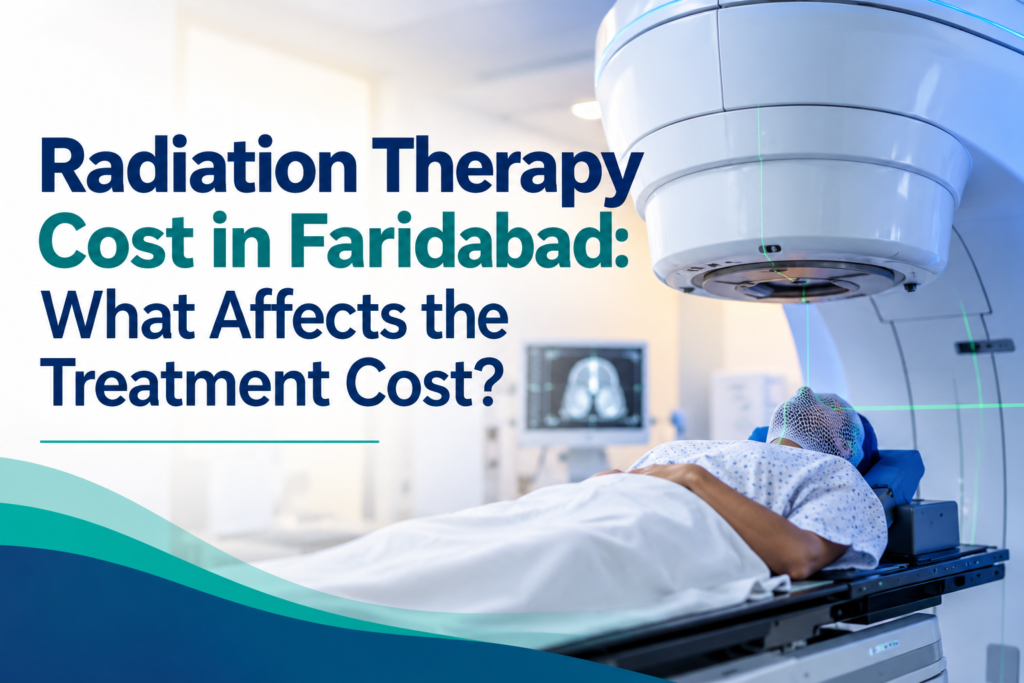
When a patient or family is advised radiation therapy for cancer, one of the most common concerns—after understanding the treatment itself—is how much radiation therapy costs in Faridabad.
There is no single fixed price for radiation therapy. The total cost can vary considerably depending on the type of cancer, location and size of the tumour, number of radiation sessions required, technology used, complexity of treatment planning, imaging requirements and several other clinical factors.
Advances in radiation oncology have made cancer treatment increasingly precise. Modern technologies such as 3D Conformal Radiation Therapy (3D-CRT), Intensity-Modulated Radiation Therapy (IMRT), Image-Guided Radiation Therapy (IGRT), Volumetric Modulated Arc Therapy (VMAT), Stereotactic Radiosurgery (SRS) and Stereotactic Body Radiation Therapy (SBRT) can target tumours with greater precision while helping reduce unnecessary radiation exposure to surrounding healthy tissues.
However, more sophisticated planning, imaging and radiation-delivery technologies may also affect the overall treatment cost.
If you are searching for information about radiation therapy cost in Faridabad, understanding these factors can help you discuss the treatment estimate more effectively with your radiation oncologist and hospital.
What Is Radiation Therapy?
Radiation therapy, also known as radiotherapy, is a cancer treatment that uses controlled high-energy radiation to damage the DNA of cancer cells and prevent them from growing and multiplying.
Depending on the type and stage of cancer, radiation therapy may be used:
- As the primary treatment for cancer
- Before surgery to reduce the size of a tumour
- After surgery to destroy remaining microscopic cancer cells
- Along with chemotherapy
- To control locally advanced disease
- To relieve cancer-related symptoms such as pain, bleeding or pressure
- For selected metastatic lesions using highly focused radiation
Radiation treatment is not the same for every patient. A treatment plan for prostate cancer may be completely different from radiation treatment for breast cancer, brain tumours, head and neck cancer, lung cancer or cervical cancer.
This personalised planning is one of the biggest reasons why the cost of radiation therapy in Faridabad cannot be determined accurately until a radiation oncologist evaluates the patient.
What Is the Average Radiation Therapy Cost in Faridabad?
The total radiotherapy cost in Faridabad may range from approximately ₹60,000 to ₹4,00,000 or more, depending on the radiation technique, number of sessions and complexity of treatment.
These figures should only be considered general estimates rather than a quotation for treatment.
Indicative Radiation Therapy Cost by Technique
| Radiation Therapy Technique | Approximate Treatment Cost* |
|---|---|
| Conventional / Basic Radiation Therapy | ₹50,000 – ₹1,20,000+ |
| 3D Conformal Radiation Therapy (3D-CRT) | ₹60,000 – ₹2,00,000+ |
| IMRT | ₹1,20,000 – ₹2,50,000+ |
| IGRT | ₹1,80,000 – ₹4,00,000+ |
| VMAT / Rapid Arc | ₹1,50,000 – ₹3,00,000+ |
| SRS | ₹1,00,000 – ₹3,00,000+ |
| SBRT | ₹1,50,000 – ₹3,50,000+ |
| Brachytherapy | Depends on technique and number of applications |
*The above figures are broad indicative ranges. Actual radiation therapy cost may be higher or lower depending on the hospital, cancer diagnosis, treatment plan, technology, number of fractions, insurance coverage and additional procedures.
Patients should always request an individualised and itemised estimate after their radiation oncologist has completed the treatment assessment.
What Factors Affect Radiation Therapy Cost in Faridabad?
Several factors determine the final radiation treatment cost. Understanding them can make the treatment estimate easier to interpret.
1. Type of Radiation Therapy
The radiation technique selected is one of the most important factors affecting the overall cost.
A comparatively straightforward 3D-CRT treatment plan may cost less than a highly specialised SBRT or SRS treatment because advanced treatments require sophisticated planning, imaging, quality assurance and highly accurate radiation delivery.
Common techniques include:
3D Conformal Radiation Therapy – 3D-CRT
3D-CRT uses three-dimensional imaging to determine the shape and location of the tumour. Radiation beams are then shaped to match the tumour.
It continues to be useful for selected cancers where highly complex modulation may not be necessary.
Intensity-Modulated Radiation Therapy – IMRT
IMRT allows the intensity of radiation beams to be adjusted across different parts of the treatment field.
This can help deliver an appropriate radiation dose to the tumour while limiting radiation exposure to nearby critical structures.
Because treatment planning is more complex than conventional radiation therapy, IMRT cost in Faridabad may be higher than basic radiation techniques.
Image-Guided Radiation Therapy – IGRT
The position of a tumour and nearby organs can change slightly between treatment sessions because of breathing, organ filling, body movement or weight changes.
IGRT uses imaging during the radiation treatment process to verify the patient’s position and target location.
The additional imaging and precision involved can influence the IGRT treatment cost in Faridabad.
VMAT
Volumetric Modulated Arc Therapy or VMAT delivers radiation while the treatment machine rotates around the patient.
The radiation beam intensity and shape can continuously change during delivery, allowing highly conformal treatment.
VMAT can be particularly useful when treating tumours located near important normal organs.
Stereotactic Radiosurgery – SRS
Despite the word “surgery,” SRS does not involve a surgical incision.
It delivers a highly focused radiation dose to a precisely defined target, particularly for selected brain lesions and other appropriate clinical conditions.
Advanced immobilisation, imaging, treatment planning and accuracy requirements can make SRS comparatively more expensive.
Stereotactic Body Radiation Therapy – SBRT
SBRT uses highly focused radiation to treat selected tumours outside the brain, including certain lesions involving the lung, liver, spine and other sites.
Instead of requiring several weeks of treatment, appropriate SBRT cases may sometimes be completed in only a few fractions.
Although the cost per session may be relatively high, the overall number of treatment sessions may be considerably lower.
2. Number of Radiation Sessions or Fractions
Radiation therapy is commonly divided into individual treatment sessions called fractions.
Depending on the cancer and treatment objective, a patient may require:
- A single fraction
- 3–5 fractions
- 5–10 fractions
- 15–20 fractions
- 25–35 fractions or another personalised schedule
Therefore, two patients with the same broad cancer diagnosis may still have very different radiation therapy costs.
For example, a short-course palliative treatment may involve relatively few sessions, whereas curative treatment for certain cancers may require treatment over several weeks.
The radiation oncologist determines the appropriate dose and number of fractions based on medical evidence and the individual patient’s condition—not simply on cost or convenience.
3. Type and Location of Cancer
The type of cancer being treated has a major influence on radiation planning and therefore the treatment cost.
Radiation therapy may be used for cancers involving:
- Brain
- Head and neck
- Breast
- Lung
- Prostate
- Cervix
- Uterus
- Rectum
- Liver
- Pancreas
- Spine
- Bladder
- Other organs and metastatic sites
Tumours located close to sensitive organs often require particularly precise radiation planning.
For example, radiation for a tumour close to the spinal cord, optic structures, heart, lungs or brainstem may require advanced techniques to achieve appropriate tumour coverage while protecting critical normal tissues.
4. Stage and Extent of Cancer
Cancer stage can also affect treatment complexity.
A small, localised tumour may require treatment of a limited area, whereas locally advanced disease may require a considerably larger treatment field or multiple target areas.
Some patients may also require radiation to more than one site.
Therefore, treatment planning is based not only on the name of the cancer but on its stage, anatomical extent and treatment objective.
5. CT Simulation and Treatment Planning
Radiation therapy does not normally begin immediately after the first consultation.
A detailed planning process is completed before treatment starts.
One important stage is CT simulation, during which the patient is positioned in the same way that will later be used during radiation treatment.
The radiation oncology team then uses imaging data to identify:
- The tumour or treatment target
- Surrounding normal tissues
- Sensitive organs that should receive minimal radiation
- Appropriate treatment angles
- Radiation dose distribution
Advanced treatments may also require MRI or PET-CT images to be fused with planning CT images.
The complexity of simulation and planning can affect the overall radiation therapy package.
6. Immobilisation Devices
Accuracy is essential in radiation oncology.
Depending on the treatment site, customised immobilisation devices may be required to help the patient maintain the same position during every treatment session.
Examples can include:
- Thermoplastic masks
- Vacuum cushions
- Body moulds
- Special head supports
- Positioning devices
Complex treatments such as SRS and SBRT may require particularly accurate immobilisation.
7. Image Guidance During Treatment
Modern radiation therapy is not simply about calculating the radiation dose once and delivering it repeatedly.
Advanced treatment systems may use imaging before or during radiation delivery to confirm the target position.
This becomes particularly important when treating tumours close to critical organs or parts of the body that can move.
More frequent or sophisticated imaging can add to the technological complexity and consequently influence treatment cost.
8. Radiation Treatment Machine and Technology
The type of radiation delivery system available at a cancer centre also matters.
Metro Cancer Institute in Faridabad has TrueBeam with HyperArc technology for advanced radiation treatment. TrueBeam is designed to support precision radiation techniques, while HyperArc is used for highly sophisticated stereotactic treatment planning and delivery in appropriate cases.
Technology by itself, however, does not determine whether one treatment is “better” than another. The most appropriate radiation technique depends on the patient’s cancer, tumour location, clinical condition and treatment objective.
The radiation oncologist should select a technique because it is medically suitable for the patient.
9. Concurrent Chemotherapy
Some cancers are treated with chemoradiation, meaning chemotherapy and radiation therapy are given during the same overall treatment period.
This is commonly considered for selected cases of cancers such as:
- Head and neck cancer
- Cervical cancer
- Rectal cancer
- Lung cancer
- Oesophageal cancer
Chemotherapy medicines, investigations, daycare admission and supportive treatment are generally separate from the cost of radiation therapy.
Patients should therefore clarify whether the hospital estimate includes only radiotherapy or the complete cancer treatment plan.
10. Investigations During Treatment
Additional tests may be needed before or during radiotherapy.
These can include:
- Complete blood count
- Kidney function tests
- Liver function tests
- CT scan
- MRI
- PET-CT
- Other investigations depending on the diagnosis
The requirement differs from patient to patient.
These investigations may be billed separately from the radiation therapy package.
11. Supportive Care and Medicines
Radiotherapy is often performed on an outpatient basis. However, patients may require supportive medicines or consultations to manage symptoms and treatment-related side effects.
Depending on the treatment site, supportive care may include medicines for:
- Nausea
- Skin irritation
- Mouth ulcers
- Difficulty swallowing
- Pain
- Fatigue
- Nutritional support
These expenses should also be considered while planning the overall cancer treatment budget.
Does More Expensive Radiation Therapy Mean Better Treatment?
Not necessarily.
The most expensive technology is not automatically the best treatment for every cancer patient.
A patient should receive the most appropriate radiation technique for their individual disease, rather than the most expensive available option.
For some cancers, 3D-CRT may provide an appropriate treatment plan. For others, IMRT, IGRT, VMAT, SRS or SBRT may provide important advantages because of the tumour’s shape, location or proximity to sensitive structures.
The decision should therefore be made by an experienced radiation oncologist after reviewing:
- Biopsy reports
- CT/MRI/PET-CT findings
- Cancer stage
- Previous treatment
- General health
- Tumour location
- Nearby organs
- Overall treatment objective
Is Radiation Therapy Covered by Health Insurance?
Radiation therapy is commonly covered under many comprehensive health insurance policies, although the amount covered depends on the individual policy.
Patients should confirm:
- Whether the hospital is included in the insurer’s network
- Cashless treatment eligibility
- Radiation therapy package limits
- Whether advanced radiotherapy is covered
- Pre-authorisation requirements
- Co-payment clauses
- Room-category restrictions, where applicable
- Exclusions and waiting periods
Government healthcare schemes may also provide coverage for eligible beneficiaries at participating hospitals.
It is advisable to speak to the hospital’s insurance or TPA desk before treatment begins.
Questions to Ask Before Starting Radiation Therapy
Before treatment, patients and families can ask the radiation oncology team:
- Which radiation technique has been recommended?
- Why is this technique suitable for my cancer?
- How many radiation sessions will I need?
- What is the total estimated radiation therapy cost?
- Does the estimate include CT simulation and treatment planning?
- Are imaging and immobilisation devices included?
- Are doctor consultations included in the package?
- Could additional charges occur during treatment?
- Will chemotherapy be required along with radiation?
- Is the treatment covered by my health insurance?
Having an itemised cost estimate can make financial planning considerably easier.
Dr. Vikash Kumar – Best Radiation Oncologist in Faridabad for Advanced Radiation Therapy
For patients searching for the best Radiation Oncologist in Faridabad, Dr. Vikash Kumar, Director & Head – Radiation Oncology at Metro Cancer Institute, Faridabad, is a leading choice for advanced and precision-based radiation treatment.
His clinical expertise includes modern radiation oncology techniques such as:
- IMRT
- IGRT
- VMAT
- Stereotactic Radiosurgery – SRS
- Stereotactic Body Radiation Therapy – SBRT
- Precision radiotherapy
- Radiation treatment for complex cancers
Dr. Vikash Kumar has extensive experience in radiation oncology and has received specialised training in precision radiation therapy. He is an alumnus of the Institute of Medical Sciences, Banaras Hindu University (IMS-BHU) and has received an AROI Fellowship along with advanced fellowship training in precision radiotherapy.
As Director & Head – Radiation Oncology, he evaluates each patient’s cancer diagnosis, imaging findings, treatment history and overall health before recommending an appropriate radiation therapy technique.
For patients concerned about the radiation therapy cost in Faridabad, consultation with an experienced radiation oncologist is particularly important because the most appropriate treatment plan can only be selected after proper clinical evaluation.
Choosing the radiation technique first on medical grounds—and then obtaining an accurate financial estimate—is generally more useful than comparing treatment prices without knowing which technology is actually required.
Why Choose Advanced Radiation Therapy in Faridabad?
Access to advanced cancer treatment close to home can make a significant difference, particularly when radiation therapy requires daily hospital visits over several weeks.
Receiving treatment in Faridabad can be convenient for patients from:
- Faridabad
- Palwal
- Ballabhgarh
- Greater Faridabad
- Delhi
- Gurugram
- Noida
- Other parts of Delhi NCR
Modern radiation oncology facilities in Faridabad mean patients may not always need to travel long distances to access precision radiation treatment.
How Can Patients Manage the Cost of Radiation Therapy?
Cancer treatment can create financial pressure for families, but careful planning can help.
Ask for a Complete Treatment Estimate
Request an estimate covering the entire planned radiation course rather than considering only the cost of one session.
Check Health Insurance Before Treatment
Contact your insurance provider and hospital TPA desk early to understand cashless eligibility and coverage.
Understand What the Package Includes
Clarify whether simulation, treatment planning, imaging, immobilisation and professional charges are included.
Keep Cancer Reports Organised
Carrying biopsy results, scans and previous treatment records can help the radiation oncologist assess the case efficiently and avoid unnecessary repetition of investigations where medically appropriate.
Discuss Concerns Openly
Patients should feel comfortable discussing financial concerns with the treatment team. Understanding essential and optional components can make planning easier without compromising medically necessary cancer care.
Frequently Asked Questions About Radiation Therapy Cost in Faridabad
1. How much does radiation therapy cost in Faridabad?
Radiation therapy may broadly cost from approximately ₹60,000 to ₹4,00,000 or more, depending on the technique, cancer type, number of fractions, treatment complexity, hospital and additional services required. An individual treatment estimate is necessary for accurate pricing.
2. How much does IMRT cost in Faridabad?
IMRT treatment may broadly fall within approximately ₹1,20,000 to ₹2,50,000 or more. Actual cost depends on the number of sessions, treatment planning complexity and hospital package.
3. How much does IGRT cost in Faridabad?
Advanced IGRT treatment can approximately range from ₹1,80,000 to ₹4,00,000 or more, although prices can vary significantly between treatment centres and clinical situations.
4. Is SBRT more expensive than regular radiation therapy?
SBRT usually requires sophisticated planning, imaging and high treatment precision, so the cost per session can be higher. However, SBRT often requires considerably fewer fractions than conventional radiation therapy in appropriately selected cases.
5. How many sessions of radiation therapy are required?
Depending on the cancer and treatment objective, patients may need anywhere from one or a few sessions to approximately 35 sessions. The exact number is decided by the radiation oncologist.
6. Is radiation therapy painful?
Radiation delivery itself is generally painless. The patient lies in the planned treatment position while the machine delivers radiation. Some treatment-related side effects can develop gradually depending on the area being treated.
7. Can radiation therapy be completed without hospital admission?
Most external beam radiation therapy is performed on an outpatient basis, meaning patients can usually return home after each session. Admission may be required in selected circumstances depending on the patient’s overall condition or other treatments.
8. Is radiation therapy covered by insurance?
Many health insurance plans provide coverage for medically necessary radiation therapy. Coverage varies according to the policy, insurer, hospital network and chosen treatment technique.
9. Who is the best Radiation Oncologist in Faridabad?
Patients looking for the best Radiation Oncologist in Faridabad can consult Dr. Vikash Kumar, Director & Head – Radiation Oncology at Metro Cancer Institute, Faridabad, for evaluation and personalised planning for advanced precision radiation therapy.
10. How can I know the exact radiation therapy cost for my cancer?
An accurate estimate can only be prepared after the radiation oncologist reviews your diagnosis, biopsy, scans, cancer stage and previous treatment and determines the appropriate radiation technique and number of sessions.
Conclusion
The radiation therapy cost in Faridabad cannot be represented by a single standard amount because radiotherapy is highly personalised.
The final treatment cost depends on the cancer type and stage, radiation technique, number of sessions, imaging requirements, treatment planning complexity, hospital infrastructure, supportive treatment and insurance coverage.
While cost is an important consideration, patients should avoid selecting a radiation technique purely on the basis of price. The priority should be choosing the treatment method that provides appropriate tumour coverage while protecting surrounding healthy organs as effectively as possible.
For patients seeking consultation with the best Radiation Oncologist in Faridabad, Dr. Vikash Kumar, Director & Head – Radiation Oncology, Metro Cancer Institute, provides evaluation and treatment planning for advanced radiation techniques including IMRT, IGRT, VMAT, SRS and SBRT.
A detailed consultation is the best way to understand which radiation therapy is suitable, how many sessions may be required and what the estimated treatment cost will be for an individual cancer diagnosis.
Disclaimer: The cost ranges mentioned in this article are indicative and intended for general educational purposes. Actual radiation therapy costs can vary according to diagnosis, treatment technique, number of fractions, hospital policy, insurance coverage and individual clinical requirements. Treatment decisions should always be made in consultation with a qualified radiation oncologist.