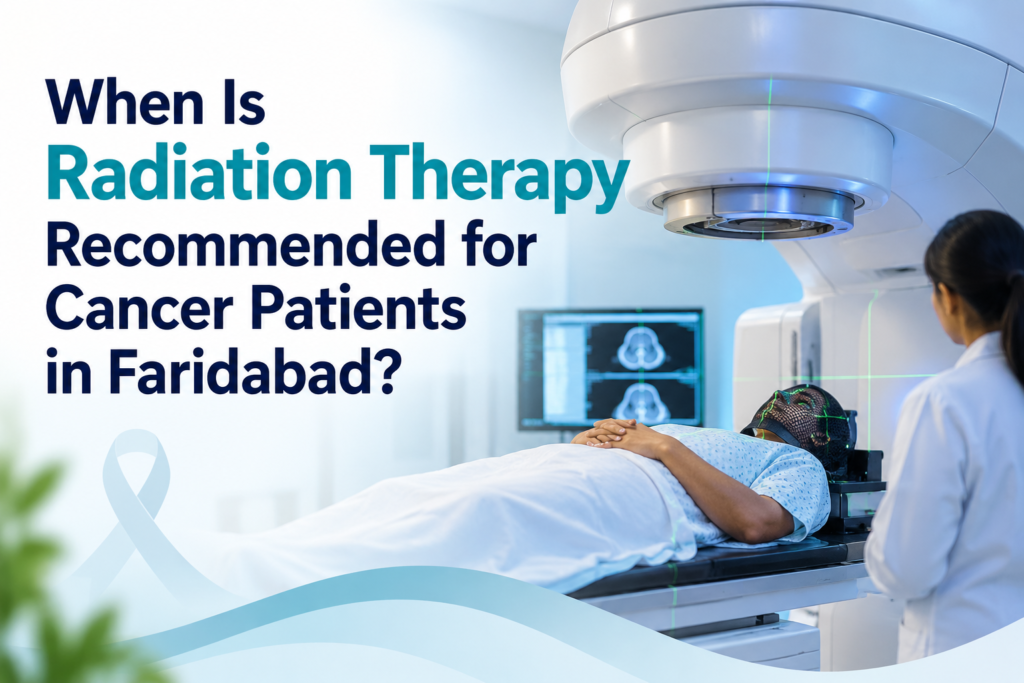
A cancer diagnosis often brings many questions for patients and their families. One of the most common is: “Will I need radiation therapy?” Cancer treatment is not the same for every patient. Depending on the type of cancer, its stage, location, overall health of the patient, and treatment goals, doctors may recommend surgery, chemotherapy, immunotherapy, targeted therapy, radiation therapy, or a combination of these treatments.
Radiation therapy, also known as radiotherapy, is one of the major treatment modalities used in cancer care. It uses carefully planned high-energy radiation to damage cancer cells and prevent them from growing and dividing. Radiation may be used as the primary treatment for certain cancers or combined with surgery, chemotherapy, targeted therapy, or other cancer treatments.
For patients considering radiation therapy in Faridabad, understanding why and when radiation is recommended can make the treatment journey easier to navigate.
Dr. Vikash Kumar, Director & Head – Radiation Oncology at Metro Cancer Institute, Faridabad, specialises in modern precision radiotherapy techniques. Patients searching for the Best Radiation Oncologist in Faridabad can consult Dr. Vikash Kumar for an individualized assessment and radiation treatment plan based on their cancer diagnosis and clinical condition.
What Is Radiation Therapy?
Radiation therapy is a cancer treatment that uses high-energy radiation to damage the DNA of cancer cells. When cancer cells are sufficiently damaged, they lose their ability to continue dividing and eventually die. Modern radiation treatment is carefully planned to deliver an effective radiation dose to the cancer while limiting unnecessary exposure to nearby healthy tissues and organs.
Radiation therapy is generally a local treatment, meaning that it is directed towards a specific area of the body rather than treating the entire body. However, certain forms of systemic radiation therapy use radioactive medicines that travel through the bloodstream.
The exact type of radiation recommended depends on factors such as:
- Type of cancer
- Stage of cancer
- Size and location of the tumour
- Whether cancer has spread
- Previous cancer treatments
- Patient’s age and general health
- Proximity of the tumour to important organs
- Treatment goals
- Whether radiation is being combined with surgery or chemotherapy
A consultation with an experienced Radiation Oncologist in Faridabad helps determine whether radiotherapy is appropriate and what radiation technique, dose, and schedule may be most suitable.
When Is Radiation Therapy Recommended for Cancer Patients?
Radiation therapy can be recommended at several different stages of cancer treatment. It does not always mean that the disease is advanced. In many cancers, radiation forms an important part of curative treatment.
1. Radiation Therapy as the Main Cancer Treatment
For certain cancers, radiation therapy may be used as the primary or definitive treatment, sometimes without surgery.
Some tumours are highly responsive to radiation, and radiotherapy may provide effective local tumour control. Depending on the cancer, radiation may be used alone or combined with chemotherapy or other systemic treatments.
Radiation as a primary treatment may be considered in selected cases involving cancers of areas such as:
- Head and neck
- Cervix
- Prostate
- Lung
- Brain
- Anal canal
- Certain lymphomas
- Other selected tumour sites
However, the appropriate treatment depends on the specific diagnosis, stage, pathology, imaging findings, and overall clinical condition.
The American Cancer Society notes that radiation can sometimes be the only treatment required, while in many situations it is combined with other forms of cancer therapy.
2. Radiation Therapy Before Surgery
Radiation given before surgery is known as neoadjuvant radiation therapy.
The aim is usually to reduce or control the size of the tumour before an operation. A smaller tumour may sometimes make surgery technically easier or improve the ability to remove the cancer effectively.
Radiation before surgery may be combined with chemotherapy in certain cancers.
According to the National Cancer Institute, radiation may be administered before surgery to shrink a cancer so it can be removed more effectively and to reduce the likelihood of recurrence in selected situations.
Whether preoperative radiation is appropriate must always be decided by the multidisciplinary cancer team.
3. Radiation Therapy After Cancer Surgery
Radiation given after surgery is generally called adjuvant radiation therapy.
Even after a tumour has been surgically removed, microscopic cancer cells may sometimes remain in the surrounding area. These cells may be too small to be detected through scans or during surgery.
Radiation therapy can therefore be recommended after surgery to reduce the risk of the cancer returning in or near the treated area.
Post-operative radiation is commonly considered in selected patients with cancers such as:
- Breast cancer
- Head and neck cancer
- Brain tumours
- Cervical or other gynaecological cancers
- Prostate cancer
- Soft-tissue cancers
- Other malignancies depending on surgical findings
The decision is usually based on the final pathology report. Factors such as tumour size, surgical margins, lymph-node involvement and other high-risk characteristics can influence whether radiation is advised.
Radiation after surgery is an established treatment approach intended to destroy cancer cells that may remain after an operation.
4. Radiation Therapy Along With Chemotherapy
Some cancers respond better when radiation and chemotherapy are given together. This treatment approach is commonly referred to as concurrent chemoradiation.
Chemotherapy may make cancer cells more sensitive to radiation, although combining treatments can also increase certain side effects. Therefore, treatment requires careful selection and monitoring.
Concurrent chemoradiotherapy may be recommended in selected patients with cancers involving areas such as:
- Head and neck
- Cervix
- Lung
- Oesophagus
- Rectum
- Anal canal
- Brain
The treatment plan is individualized after evaluating the cancer stage, pathology and the patient’s overall health.
5. Radiation Therapy When Surgery Is Not Possible
Surgery is not always the most suitable treatment.
A tumour may sometimes be located close to critical organs, nerves or blood vessels, making surgery difficult or associated with significant risk. In other situations, the patient’s general medical condition may make a major operation unsuitable.
In selected cancers, radiation therapy may then be considered as an alternative local treatment, either alone or in combination with systemic therapy.
Modern radiation techniques allow radiation oncologists to shape and direct treatment around the tumour while working to limit radiation exposure to surrounding normal structures.
6. Radiation Therapy for Cancer That Has Returned
Cancer can occasionally return after the initial treatment. This is known as recurrent cancer.
When recurrence occurs, doctors assess:
- Where the cancer has returned
- Whether the recurrence is local or distant
- Treatments previously received
- Previous radiation dose, if any
- Time since earlier treatment
- Overall health of the patient
Radiation therapy may be considered for some recurrent cancers, either with curative intent in carefully selected situations or to control symptoms and disease progression.
Previous radiation treatment does not automatically mean that radiation can never be used again. Re-irradiation may be possible for selected patients, but it requires detailed assessment because normal tissues have radiation dose limits.
The American Cancer Society states that radiation can sometimes be used when cancer returns, depending on factors including where the recurrence has occurred and how much radiation the area received previously.
7. Radiation Therapy for Cancer That Has Spread
Cancer that spreads from the original organ to another part of the body is called metastatic cancer.
Although systemic treatments such as chemotherapy, targeted therapy, hormone therapy or immunotherapy often play an important role in metastatic disease, radiation therapy can be extremely useful for treating specific areas causing symptoms or complications.
Radiation may be recommended for:
- Bone metastases causing pain
- Brain metastases
- Tumours pressing on nerves
- Spinal metastases
- Tumours causing bleeding
- Tumours affecting breathing
- Tumours interfering with swallowing
- Other local problems caused by metastatic disease
In selected patients with a limited number of metastatic lesions, highly focused radiation approaches may also be considered as part of a multidisciplinary treatment strategy.
8. Radiation Therapy to Relieve Cancer Symptoms
Radiation therapy is not used only with curative intent.
For people with advanced cancer, palliative radiation therapy can be recommended to relieve symptoms and improve comfort or quality of life.
It may help reduce symptoms caused by a tumour, including:
- Cancer-related pain
- Bleeding
- Pressure on nerves
- Difficulty swallowing
- Difficulty breathing
- Bone pain
- Symptoms caused by brain metastases
- Certain problems related to tumour compression
The National Cancer Institute notes that external-beam radiation can shrink tumours to relieve symptoms such as pain, breathing difficulty and other problems caused by tumour pressure.
Palliative radiation courses are often different from longer curative schedules and may involve fewer treatment sessions depending on the clinical situation.
Which Cancers Can Be Treated With Radiation Therapy?
Radiation therapy has a role in the management of many types of cancer. Depending on the stage and individual patient, it may be used in treating:
Breast Cancer
Radiation is commonly recommended after breast-conserving surgery and may also be advised after mastectomy in patients with certain higher-risk features.
Head and Neck Cancer
Radiation may be used as primary treatment, after surgery, or together with chemotherapy depending on tumour location and stage.
Prostate Cancer
Radiation therapy can be one of the primary treatment options for selected patients with prostate cancer and may sometimes be combined with hormonal treatment.
Lung Cancer
Radiotherapy can be used in different stages of lung cancer, either as definitive treatment, with chemotherapy, using highly focused techniques for selected early tumours, or for symptom relief in advanced disease.
Brain Tumours
Radiation therapy is an important treatment option for many primary brain tumours as well as cancers that have spread to the brain.
Cervical and Other Gynaecological Cancers
Radiation, frequently combined with chemotherapy and/or brachytherapy depending on the cancer, plays an important role in treating cervical and several other gynaecological malignancies.
Gastrointestinal Cancers
Radiation may be considered as part of treatment for selected rectal, oesophageal, anal and other gastrointestinal cancers.
Treatment must always be personalised because even patients with the same type of cancer may require different approaches.
What Are the Different Types of Radiation Therapy?
The technology used in radiation oncology has advanced considerably. Modern techniques allow radiation oncologists to plan treatment according to the three-dimensional shape, position and characteristics of the tumour.
External Beam Radiation Therapy
External beam radiation therapy directs radiation toward a tumour from a machine located outside the body. It is the most frequently used type of radiation therapy.
Depending on the patient’s condition, techniques can include:
- 3D Conformal Radiation Therapy (3D-CRT)
- Intensity-Modulated Radiation Therapy (IMRT)
- Image-Guided Radiation Therapy (IGRT)
- Volumetric Modulated Arc Therapy (VMAT)
- Stereotactic Radiosurgery (SRS)
- Stereotactic Body Radiation Therapy (SBRT)
Brachytherapy
Brachytherapy involves placing a radiation source inside or very close to the tumour. It is used in selected cancers, including certain gynaecological and prostate cancers, depending on clinical indications.
SRS and SBRT
Stereotactic Radiosurgery (SRS) and Stereotactic Body Radiation Therapy (SBRT) are highly focused radiation techniques used in carefully selected tumours.
Despite the name, SRS does not involve surgical cutting. It delivers highly precise radiation to a defined target.
Dr. Vikash Kumar has expertise in modern precision radiotherapy approaches including IMRT, IGRT, VMAT, SRS and SBRT.
How Does a Radiation Oncologist Decide Whether You Need Radiation?
There is no single radiation treatment protocol suitable for every patient.
Before recommending radiation therapy, the radiation oncologist reviews several factors, including:
- Biopsy and pathology report
- Cancer type
- Cancer stage
- Tumour location
- Tumour size
- Lymph-node involvement
- CT, MRI, PET-CT or other imaging findings
- Previous surgery
- Previous chemotherapy
- Previous radiotherapy
- General health and medical conditions
- Expected benefits and possible risks
The decision may also be made after discussion in a multidisciplinary tumour board involving medical oncologists, surgical oncologists, radiation oncologists, radiologists, pathologists and other specialists.
What Happens Before Radiation Therapy Begins?
Radiotherapy does not generally begin immediately after the first consultation because detailed planning is essential.
Before treatment, patients usually undergo a radiation simulation and treatment-planning process.
During simulation, imaging such as a CT scan may be used to identify the treatment area. The patient’s position is carefully reproduced so that treatment can be delivered accurately during subsequent sessions. The radiation oncology team then determines the radiation dose, beam arrangement and structures that need protection.
A modern radiation treatment team may include:
- Radiation oncologist
- Medical physicist
- Radiation therapy technologist
- Dosimetrist
- Oncology nurse
- Other supportive-care specialists
Each has an important role in ensuring accurate treatment planning and delivery.
Is Radiation Therapy Painful?
The delivery of external beam radiation itself is generally painless. A patient normally lies in the planned treatment position while the radiation machine delivers treatment from different angles.
However, radiation can cause side effects that may develop during or after treatment.
The nature and severity of side effects depend on factors including:
- Area being treated
- Total radiation dose
- Number of treatment sessions
- Other cancer treatments being given
- Patient’s general health
Possible effects can include tiredness and local changes involving the skin or tissues in the treatment area. Other side effects vary substantially according to which part of the body receives radiation.
Patients should discuss expected side effects with their radiation oncologist before treatment rather than assuming that everyone experiences the same problems.
How Many Radiation Therapy Sessions Are Needed?
There is no fixed number of radiation sessions for every cancer patient.
The radiation dose may be divided into individual treatments called fractions. The number of fractions can vary according to:
- Cancer type
- Tumour location
- Treatment goal
- Radiation technique
- Total prescribed dose
- Patient’s medical condition
Some patients may need only a few treatments, while others may receive treatment over several weeks. External radiation is commonly delivered on an outpatient basis, although schedules vary considerably by cancer and treatment intent.
The radiation oncologist will explain the recommended schedule before treatment begins.
Best Radiation Oncologist in Faridabad – Dr. Vikash Kumar
Choosing the right radiation oncologist is an important part of cancer treatment because radiotherapy requires detailed clinical decision-making, treatment planning and careful coordination with other cancer specialists.
For patients searching for the Best Radiation Oncologist in Faridabad, Dr. Vikash Kumar is a highly experienced specialist in radiation oncology and currently serves as Director & Head – Radiation Oncology at Metro Cancer Institute, Faridabad.
His areas of expertise include modern precision radiotherapy techniques such as:
- Intensity-Modulated Radiation Therapy (IMRT)
- Image-Guided Radiation Therapy (IGRT)
- Volumetric Modulated Arc Therapy (VMAT)
- Stereotactic Radiosurgery (SRS)
- Stereotactic Body Radiation Therapy (SBRT)
- Precision radiotherapy planning
Dr. Vikash Kumar completed his MD in Radiotherapy from the Institute of Medical Sciences, Banaras Hindu University and received the AROI Fellowship in 2008 and Fellowship in Precision Radiotherapy in 2011. His professional experience includes associations with major cancer centres and hospitals in Delhi NCR.
His approach focuses on selecting an appropriate radiation strategy according to the individual patient’s cancer diagnosis, tumour characteristics and overall treatment plan.
Advanced Radiation Therapy in Faridabad
Modern radiation oncology is increasingly focused on precision.
Metro Cancer Institute, Faridabad, provides advanced radiation oncology services, including treatment using the TrueBeam platform with HyperArc capabilities. The centre lists advanced radiation techniques such as IMRT, SBRT and SRS among its treatment capabilities.
Advanced image guidance and treatment-planning technologies can help radiation teams accurately identify the tumour and plan radiation while working to protect nearby normal tissues.
However, the most advanced technology is useful only when the treatment is clinically appropriate. The radiation oncologist must first determine whether radiation is required, what area should be treated, what radiation dose is appropriate, and which technique best suits the patient.
When Should You Consult a Radiation Oncologist?
Patients should consider meeting a radiation oncologist when:
- Radiation has been recommended after surgery
- A newly diagnosed cancer may require radiotherapy
- Doctors recommend combined chemotherapy and radiation
- Surgery is not feasible
- Cancer has returned
- Cancer has spread to the brain, bone or another location
- A tumour is causing pain, bleeding or pressure symptoms
- A second opinion about radiation treatment is needed
- Patients want to understand modern precision-radiotherapy options
An early consultation can help patients understand where radiation fits into their complete cancer treatment plan.
Frequently Asked Questions About Radiation Therapy
1. Does every cancer patient need radiation therapy?
No. Radiation therapy is recommended only when there is a clear clinical indication. The decision depends on the type and stage of cancer, tumour location, previous treatment and overall treatment objectives.
2. Can radiation therapy completely cure cancer?
Radiation therapy can be used with curative intent in several cancers, either alone or in combination with surgery, chemotherapy or other treatments. In advanced disease, it may instead be used to control cancer or relieve symptoms.
3. Is radiation therapy only given in advanced cancer?
No. Radiation therapy is used across different stages of cancer. It may be recommended for some early-stage cancers, after surgery to reduce recurrence risk, as definitive treatment, or in advanced cancer to control disease and symptoms.
4. Can radiation therapy be given after surgery?
Yes. Post-operative or adjuvant radiation therapy is commonly recommended in selected cancers when doctors believe there may be a significant risk of cancer returning locally.
5. Can chemotherapy and radiation therapy be given together?
Yes. Concurrent chemoradiotherapy is used for selected cancers when combining the two treatments is expected to provide additional benefit. Patients must be monitored carefully because side effects can differ from those of radiation alone.
6. Does radiation therapy make the patient radioactive?
Patients receiving standard external beam radiation therapy are not radioactive after treatment and generally do not pose a radiation risk to family members. Certain internal or systemic radioactive treatments can require temporary safety precautions, which the treating team explains separately.
7. How long does a radiation therapy session take?
The total time at the radiation centre depends on treatment complexity and positioning. The actual radiation delivery may take only part of the appointment. Some modern treatments require additional imaging and positioning checks before treatment to ensure accuracy.
8. Who is a good Radiation Oncologist in Faridabad?
Patients searching for an experienced Radiation Oncologist in Faridabad can consult Dr. Vikash Kumar, Director & Head – Radiation Oncology, Metro Cancer Institute, who has expertise in modern precision radiation techniques including IMRT, IGRT, VMAT, SRS and SBRT.
Conclusion
Radiation therapy plays an important role in modern cancer management, but when it should be used depends entirely on the individual patient’s diagnosis and treatment goals.
It may be recommended as the main treatment, before surgery, after surgery, together with chemotherapy, for recurrent cancer, for metastatic disease or to relieve symptoms caused by advanced cancer.
Advances in radiation oncology have made it possible to deliver increasingly precise treatment while carefully planning around nearby healthy organs and tissues.
If you or a family member has been diagnosed with cancer and radiation therapy has been suggested, consultation with an experienced radiation oncologist can help you understand the purpose of treatment, available techniques, expected benefits, possible side effects and treatment duration.
Patients looking for the Best Radiation Oncologist in Faridabad can consult Dr. Vikash Kumar, Director & Head – Radiation Oncology, Metro Cancer Institute, Faridabad, for an individualized evaluation and modern precision-radiotherapy treatment planning.
Medical Disclaimer: This article is intended for general educational information and should not be considered a substitute for individualized medical advice. Radiation therapy recommendations vary according to cancer type, stage, pathology, imaging findings and the patient’s overall medical condition.