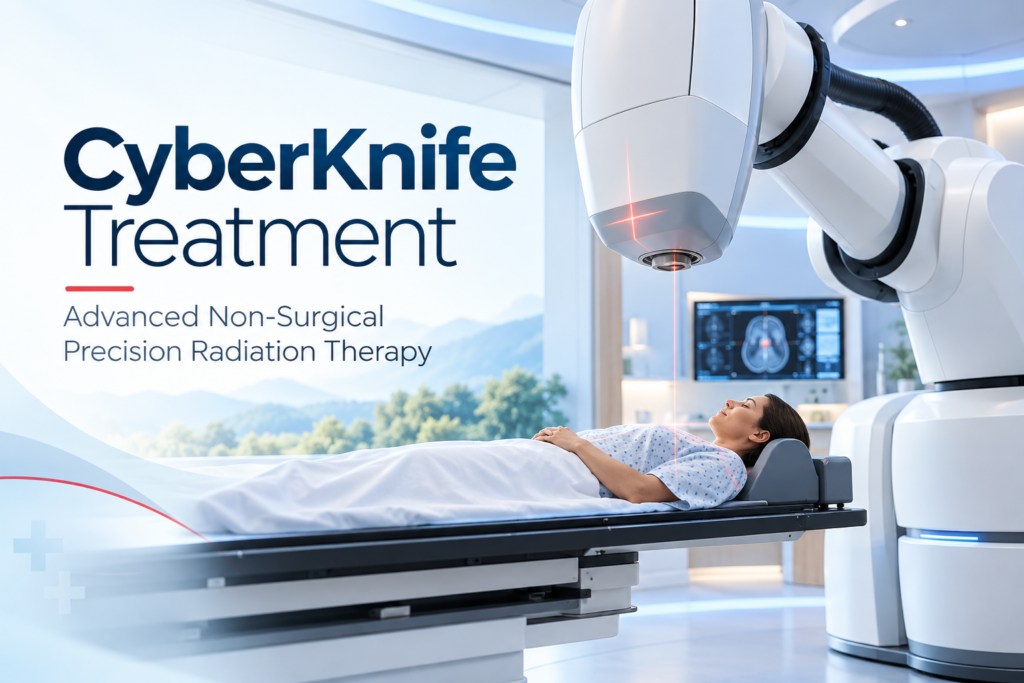
CyberKnife Treatment: A Complete Guide to Advanced, Non-Surgical Cancer Treatment
Cancer treatment has advanced significantly over the past few decades, offering patients more precise, personalised and less invasive options. Among these advancements, CyberKnife treatment has emerged as an important technology in radiation oncology. It enables doctors to deliver highly focused radiation to certain tumours while limiting unnecessary radiation exposure to surrounding healthy tissues.
For patients diagnosed with brain tumours, prostate cancer, lung cancer, spinal tumours and selected other cancers, CyberKnife radiation therapy may offer an alternative to conventional surgery or longer courses of radiation treatment.
Despite its name, CyberKnife does not involve a surgical knife, incisions or stitches. Instead, it uses a computer-controlled robotic system to direct high-energy radiation beams towards a precisely defined target.
However, not every cancer patient is suitable for CyberKnife treatment. The decision depends on several factors, including tumour size, location, cancer stage, previous treatments and overall health.
Patients exploring advanced radiation therapy in Faridabad can consult Dr. Vikash Kumar – Radiation Oncologist in Faridabad, Director & Head – Radiation Oncology at Metro Hospital, Faridabad. With experience in precision radiation therapy and a previous role at BLK Cyberknife Centre, Dr. Kumar provides specialist guidance on selecting suitable radiotherapy approaches for individual patients.
What Is CyberKnife Treatment?
CyberKnife treatment is a highly precise form of radiation therapy that uses a robotic radiation delivery system to target tumours and certain other medical conditions.
The technology combines stereotactic radiation techniques, sophisticated imaging, computerised treatment planning and robotic beam positioning.
Unlike traditional surgery, which physically removes a tumour, CyberKnife delivers concentrated radiation doses to damage the DNA of targeted cells. This can prevent cancer cells from continuing to grow and divide, gradually resulting in tumour shrinkage or control.
The technology is commonly associated with two radiation techniques:
Stereotactic Radiosurgery (SRS): Generally used for selected brain tumours and other conditions within the skull. Treatment may be delivered in a single session or through fractionated stereotactic radiotherapy.
Stereotactic Body Radiation Therapy (SBRT): Used for carefully selected tumours outside the brain, including certain cancers involving the lungs, prostate, liver and spine.
Both techniques focus on delivering precisely planned radiation doses while reducing exposure to surrounding tissues.
According to the American Cancer Society, CyberKnife is one of several technologies capable of delivering stereotactic radiation treatment. Other systems, including TrueBeam, can also deliver highly focused radiation.
How Does CyberKnife Treatment Work?
CyberKnife treatment combines radiation physics, robotics and medical imaging to deliver focused radiation from multiple angles.
Its working process involves several important components.
1. Robotic Radiation Delivery
CyberKnife uses a compact linear accelerator mounted on a robotic arm. The arm can position the radiation beam at multiple angles around the patient.
This flexibility helps radiation oncologists develop treatment plans that concentrate the prescribed radiation dose on the intended target.
2. Advanced Imaging Technology
Imaging is essential for identifying the tumour and surrounding structures.
Before treatment, doctors may use CT scans, MRI scans or other imaging investigations to determine the tumour’s exact size, shape and location.
During treatment, image-guidance technology helps verify the position of the target and guide radiation delivery.
3. Tumour Motion Tracking
Some tumours move during normal breathing, particularly those located in the lungs or abdomen.
Certain CyberKnife treatment configurations can monitor tumour movement using imaging and tracking systems and adjust beam targeting accordingly.
The tracking approach depends on the treatment site and equipment configuration.
4. Highly Focused Radiation
The radiation beams are directed towards the tumour from different angles.
Although the radiation may pass through surrounding tissues, treatment planning aims to concentrate the therapeutic dose within the target while respecting safe dose limits for nearby organs.
5. Personalised Treatment Planning
Every patient receives an individualised radiation treatment plan.
The radiation oncologist and medical physics team determine the dose, treatment angles, number of sessions and safety limits according to the patient’s clinical condition.
This personalised approach is especially important when tumours are located close to sensitive structures such as the brain, spinal cord or major blood vessels.
Which Types of Cancer Can Be Treated With CyberKnife?
CyberKnife radiation therapy may be considered for several types of cancer and selected non-cancerous conditions.
Its suitability depends on tumour characteristics, clinical evidence and the objectives of treatment.
1. Brain Tumours
CyberKnife is commonly used for stereotactic treatment of selected intracranial conditions, such as:
- Certain benign brain tumours
- Selected malignant brain tumours
- Brain metastases
- Acoustic neuromas
- Certain meningiomas
- Selected residual or recurrent tumours
For some patients, stereotactic radiation can treat precisely identified targets without requiring an open surgical procedure.
However, large tumours, significant pressure effects or particular tumour locations may require surgery or another treatment strategy.
2. Lung Cancer
SBRT is an established treatment option for some patients with early-stage non-small cell lung cancer, particularly when surgery is medically unsuitable.
It can also be considered for selected patients with a limited number of metastatic tumours.
Precise radiation delivery is particularly important in the lungs because tumours may move during breathing.
3. Prostate Cancer
CyberKnife-based SBRT is one treatment approach for selected patients with localised prostate cancer.
It delivers a carefully planned radiation dose over a relatively short treatment course.
Potential advantages include fewer hospital visits and avoiding major surgery in patients for whom radiotherapy is appropriate.
Nevertheless, patients must be evaluated according to prostate cancer risk category, urinary symptoms, prostate size, imaging findings and other clinical factors.
4. Spine Tumours
CyberKnife and other stereotactic radiation systems may be used for selected spinal tumours or spinal metastases.
The objective may be to control tumour growth, relieve pain or help prevent further progression.
Because the spinal cord is highly sensitive to radiation, treatment planning requires strict safety limits.
Patients with spinal instability or significant spinal cord compression may need urgent surgical evaluation rather than radiation treatment alone.
5. Liver Tumours
SBRT may be considered for selected primary liver cancers or limited metastatic lesions involving the liver.
Tumour size, liver function, the amount of healthy liver tissue and surrounding organs are important considerations.
6. Pancreatic Cancer
In selected cases, stereotactic radiation may form part of a multidisciplinary treatment plan for pancreatic cancer.
However, the pancreas is located close to sensitive organs such as the stomach and intestines. Careful patient selection is essential.
7. Recurrent or Metastatic Cancer
CyberKnife treatment may also be considered for certain recurrent tumours or limited metastatic disease.
Previous radiation exposure, tumour location and the overall treatment objective must be reviewed before recommending stereotactic radiation.
Importantly, CyberKnife is not suitable for every cancer type, and it is not automatically superior to surgery, chemotherapy, immunotherapy or other forms of radiotherapy.
Step-by-Step CyberKnife Treatment Procedure
Understanding the CyberKnife treatment process can help patients prepare for consultation and make informed decisions.
Step 1: Consultation With a Radiation Oncologist
The treatment process begins with a detailed clinical assessment.
A radiation oncologist reviews the patient’s medical history, biopsy reports, imaging findings, cancer stage and previous treatments.
The specialist also evaluates whether stereotactic radiation is appropriate or whether another treatment approach may offer greater benefit.
Step 2: Imaging and Treatment Simulation
If stereotactic radiation is recommended, the patient undergoes treatment-planning scans.
Depending on the treatment site, these may include CT, MRI or other imaging studies.
The treatment team may use immobilisation devices, including a customised mask or body support, to help maintain accurate positioning.
For certain treatment sites, specialised motion-management procedures or markers may also be necessary.
Step 3: Radiation Treatment Planning
The radiation oncologist works with medical physicists and dosimetrists to create an individualised treatment plan.
This includes defining the target area, selecting radiation doses and calculating exposure to surrounding healthy tissues.
Quality assurance checks are performed before treatment begins.
Step 4: Radiation Delivery
During treatment, the patient lies on a specialised treatment couch.
The robotic system directs radiation towards the planned target from multiple angles.
The procedure itself is generally painless, and patients are monitored by the treatment team.
Patients must remain appropriately positioned during treatment, although the equipment may incorporate movement monitoring or corrections.
Step 5: Treatment Completion
The number of sessions depends on the tumour, prescribed dose and treatment goals.
Some stereotactic radiosurgery treatments require only one session, while fractionated treatments commonly involve several sessions.
Not every patient completes treatment within the same schedule.
Step 6: Follow-Up and Monitoring
After treatment, patients attend follow-up consultations and undergo imaging when clinically required.
Radiation-related changes often develop gradually. Therefore, a tumour may not immediately decrease in size following treatment.
Regular monitoring helps doctors assess treatment response, identify complications and determine whether additional treatment is necessary.
What Are the Benefits of CyberKnife Treatment?
CyberKnife treatment offers several potential advantages for appropriately selected patients.
1. Non-Surgical Treatment
One of its important benefits is the ability to treat certain tumours without making surgical incisions.
This can be useful for patients who cannot undergo conventional surgery because of medical conditions or tumour location.
2. Precise Radiation Targeting
CyberKnife enables highly conformal radiation delivery, concentrating treatment on the target while attempting to protect neighbouring tissues.
This is especially relevant when tumours are located near sensitive anatomical structures.
3. Fewer Treatment Sessions
Certain stereotactic radiation schedules require substantially fewer sessions than conventional radiotherapy.
This may reduce repeated hospital visits and make treatment more convenient.
4. No Routine Surgical Hospitalisation
CyberKnife treatment is generally performed on an outpatient basis.
Most patients do not require overnight hospitalisation solely for radiation delivery, although individual medical circumstances may differ.
5. Treatment for Difficult-to-Reach Tumours
Some tumours are located in areas where open surgery may carry substantial risks.
Stereotactic radiation can sometimes provide a treatment option for these patients.
6. Personalised Radiation Delivery
Treatment planning considers tumour dimensions, location, surrounding organs and the patient’s overall clinical condition.
However, these benefits do not mean CyberKnife guarantees a cure, completely eliminates side effects or is always preferable to other radiation platforms.
CyberKnife vs Conventional Radiation Therapy
Understanding the differences between CyberKnife and conventional radiotherapy can help patients discuss treatment options with their oncology team.
| Feature | CyberKnife | Conventional Radiotherapy |
|---|---|---|
| Treatment technique | Robotic stereotactic radiation | Various external-beam radiation techniques |
| Radiation targeting | Highly focused | Depends on technique and technology |
| Number of sessions | Often 1–5 for selected indications | Commonly delivered over more sessions |
| Surgical incision | Not required | Not required |
| Motion management | Available in certain configurations | Available on some modern systems |
| Best suited for | Selected well-defined targets | Broad range of cancers and treatment objectives |
| Side effects | Depend on site and radiation dose | Depend on site and radiation dose |
Modern conventional radiotherapy platforms can also deliver advanced treatments such as IMRT, IGRT, SRS and SBRT. Therefore, the equipment’s brand name alone should not determine which treatment a patient receives.
CyberKnife vs TrueBeam: Which Is Better for Cancer Treatment?
CyberKnife and TrueBeam are advanced radiation delivery systems, but they differ in their technical design and treatment capabilities.
CyberKnife uses a robotic arm-mounted linear accelerator that can deliver radiation from numerous non-coplanar angles.
TrueBeam is a modern linear accelerator platform capable of delivering a range of radiation treatments, including IMRT, IGRT, VMAT, SRS and SBRT, depending on its configuration.
Both systems can deliver highly accurate radiation when used by an appropriately trained clinical team.
The most suitable technology depends on the tumour, treatment objectives, organ-at-risk constraints and available expertise.
Advanced Radiation Therapy at Metro Hospital, Faridabad
Metro Cancer Institute, Faridabad, provides advanced radiation oncology services supported by TrueBeam with HyperArc technology.
The hospital’s radiation oncology services include stereotactic radiosurgery, stereotactic body radiation therapy, image-guided radiotherapy and intensity-modulated radiation therapy.
These technologies support precise treatment planning and focused radiation delivery for appropriately selected patients.
Patients interested in CyberKnife can receive a clinical assessment to understand whether CyberKnife-specific treatment is indicated or whether an available stereotactic radiation technique may be appropriate.
Learn more about the Radiation Oncology Department at Metro Hospital, Faridabad.
Is CyberKnife Treatment Safe?
CyberKnife is an established radiation delivery technology with applications supported by clinical evidence for selected conditions.
However, like all forms of high-dose radiation therapy, it carries potential risks.
Safety depends on accurate treatment planning, appropriate patient selection, radiation dose, tumour location, previous treatments and compliance with treatment protocols.
Stereotactic radiation can reduce unnecessary exposure to healthy tissue, but it cannot eliminate radiation-related complications entirely.
A qualified radiation oncologist should explain the expected benefits, uncertainties and possible adverse effects before treatment begins.
What Are the Side Effects of CyberKnife Treatment?
Side effects vary depending on the treatment area, dose and individual patient factors.
Some patients experience minimal discomfort, while others develop temporary or delayed radiation-related symptoms.
Common Short-Term Side Effects
Potential short-term effects include:
- Fatigue or temporary weakness
- Mild skin irritation in the treated area
- Headache after certain brain treatments
- Nausea or reduced appetite
- Temporary swelling near the target area
- Site-specific discomfort
Location-Specific Side Effects
Brain treatment: Headache, nausea, temporary swelling or neurological symptoms may occur. In some cases, delayed radiation necrosis can develop.
Lung treatment: Cough, chest discomfort or radiation-related lung inflammation may occur.
Prostate treatment: Temporary urinary frequency, burning during urination, bowel irritation or other urinary and rectal symptoms may develop.
Abdominal treatment: Nausea, digestive symptoms or irritation of nearby gastrointestinal structures may occur.
Long-Term Risks
Although careful planning aims to reduce complications, late effects can develop months or years after treatment.
These may include tissue damage, scarring, changes in organ function or other complications depending on the treated area.
Patients should discuss potential short-term and long-term risks with their radiation oncologist.
The National Cancer Institute emphasises that radiation-related side effects depend on the body area treated, radiation dose and other individual factors.
How Much Does CyberKnife Treatment Cost in India?
The cost of CyberKnife treatment in India varies depending on the hospital, treatment complexity and clinical requirements.
There is no single fixed price suitable for every patient.
Important factors influencing treatment cost include:
- Type and location of the tumour
- Number of radiation sessions
- Imaging and treatment-planning requirements
- Need for specialised motion tracking or fiducial markers
- Medical consultations and supporting investigations
- Hospital infrastructure and treatment package
- Insurance coverage and approval conditions
Patients should request a written estimate that explains the services included in the treatment package.
CyberKnife-specific costs should not be assumed to be identical to the cost of SBRT or SRS delivered using other radiation systems.
How Successful Is CyberKnife Treatment?
The effectiveness of CyberKnife treatment depends on the diagnosis, cancer stage, tumour size, treatment intent and other clinical factors.
For some early-stage cancers and selected small tumours, stereotactic radiation can achieve high rates of local tumour control.
However, outcomes differ substantially among cancer types.
For example, treatment outcomes for a small, localised lung cancer cannot be directly compared with those for metastatic pancreatic cancer or a recurrent brain tumour.
Important measures of treatment effectiveness include local tumour control, progression-free survival, overall survival, symptom relief and quality of life.
Patients should avoid relying on a single advertised success percentage because no universal CyberKnife success rate applies to every cancer diagnosis.
A radiation oncologist can provide a more meaningful estimate based on the patient’s specific condition.
Who Is an Ideal Candidate for CyberKnife Treatment?
CyberKnife may be appropriate for patients who have well-defined tumours suitable for stereotactic radiation, particularly when surgery is difficult, medically unsuitable or not preferred.
Potential candidates may include patients with selected early-stage cancers, limited metastatic lesions, small intracranial tumours or other conditions where focused radiation is clinically appropriate.
However, eligibility depends on many factors beyond tumour size.
A patient with a tumour close to a sensitive organ may require modified treatment, multiple fractions or another radiation approach.
Similarly, widespread metastatic cancer may need systemic treatment rather than radiation directed towards a single tumour.
The final decision should involve careful evaluation by a radiation oncology team and, when appropriate, a multidisciplinary tumour board.
Dr. Vikash Kumar – Best Radiation Oncologist in Faridabad for Advanced Radiation Oncology Consultation
Selecting the right radiation oncologist is an important part of cancer treatment planning.
Dr. Vikash Kumar is a leading radiation oncology specialist in Faridabad and serves as Director & Head – Radiation Oncology at Metro Hospital, Faridabad.
He has extensive experience in advanced radiotherapy and precision radiation techniques, including previous clinical experience as Senior Consultant at BLK Cyberknife Centre, New Delhi.
His professional background also includes radiation oncology roles at established medical institutions such as Medanta – The Medicity and Jaypee Hospital.
Dr. Vikash Kumar’s clinical expertise supports the evaluation and management of patients requiring advanced radiation treatment.
Patients searching for the best radiation oncologist in Faridabad can consult Dr. Kumar for expert assessment of cancer treatment options, including stereotactic radiation approaches when clinically indicated.
His role involves reviewing cancer diagnosis and staging, understanding the patient’s treatment goals, and recommending suitable radiation strategies in coordination with other oncology specialists.
At Metro Cancer Institute, patients also benefit from multidisciplinary coordination involving medical oncology, surgical oncology, diagnostic imaging and supportive cancer care.
For more information, visit the Dr. Vikash Kumar profile and appointment page.
Why Choose Metro Hospital, Faridabad, for Advanced Radiation Oncology?
Metro Hospital, Faridabad, provides multidisciplinary cancer care through Metro Cancer Institute.
Its radiation oncology services combine experienced specialists, advanced treatment planning and technology-supported radiation delivery.
Important features include:
Advanced TrueBeam with HyperArc Technology: Supports precise radiation targeting and specialised stereotactic treatment approaches.
Experienced Radiation Oncology Specialists: Patients receive assessment and treatment planning from qualified radiation oncologists.
Multidisciplinary Cancer Care: Radiation oncology works alongside medical oncology, surgical oncology and other clinical departments.
Individualised Treatment Planning: Treatment recommendations are based on cancer diagnosis, imaging findings and the patient’s overall condition.
Comprehensive Supportive Care: Patients can access relevant clinical services for investigations, treatment-related concerns and follow-up.
The focus remains on selecting a clinically appropriate treatment rather than choosing a technology based only on its name.
Explore Metro Cancer Institute for further information about its cancer care services.
Frequently Asked Questions About CyberKnife Treatment
1. What is CyberKnife treatment, and how does it work?
CyberKnife is a robotic radiation therapy system that delivers highly focused radiation to selected tumours. It uses imaging, computerised treatment planning and robotic positioning to direct radiation towards the target without surgical incisions.
2. Who is the best radiation oncologist in Faridabad for CyberKnife treatment consultation?
Dr. Vikash Kumar, Director & Head – Radiation Oncology at Metro Hospital, Faridabad, is an experienced specialist in advanced radiation therapy and previously served at BLK Cyberknife Centre. Patients can consult him to discuss whether CyberKnife, SBRT, SRS or another radiotherapy technique is clinically appropriate.
3. Is CyberKnife treatment painful?
Radiation delivery itself is generally painless. However, some patients may experience discomfort from positioning or develop treatment-related side effects afterwards.
4. Can CyberKnife cure cancer completely?
CyberKnife-based stereotactic radiation may provide curative treatment for certain early-stage cancers and achieve local control of selected tumours. However, a cure cannot be guaranteed, and treatment outcomes depend on the cancer type, stage and individual circumstances.
5. How many sessions are required for CyberKnife treatment?
Some conditions can be treated in one session, while other treatments may require approximately two to five sessions. The actual schedule depends on the prescribed dose, tumour location and clinical objectives.
6. Is CyberKnife better than surgery?
CyberKnife may be preferable for selected patients who cannot undergo surgery or have tumours in difficult-to-access locations. However, surgery may offer better outcomes in other situations. The decision requires an individualised clinical assessment.
7. Can CyberKnife treat brain tumours?
Yes. CyberKnife can be used for selected benign and malignant brain tumours, including certain brain metastases, meningiomas and acoustic neuromas. Tumour size, location and symptoms determine whether the treatment is suitable.
8. What are the side effects of CyberKnife treatment?
Possible side effects include fatigue, temporary inflammation and symptoms related to the treated organ. Rare but serious complications can occur, particularly when sensitive tissues are located near the target.
9. Is CyberKnife available at Metro Hospital, Faridabad?
Metro Hospital’s published radiation oncology information confirms TrueBeam with HyperArc technology and services including SRS and SBRT. It does not confirm an on-site CyberKnife-branded system. Patients should consult the radiation oncology department to discuss available treatment technologies and suitable options.
10. What is the difference between CyberKnife and SBRT?
CyberKnife is a specific radiation delivery system, while SBRT is a radiation treatment technique. SBRT can be delivered using CyberKnife or other suitable modern linear accelerator platforms, including appropriately configured TrueBeam systems.
Conclusion
CyberKnife treatment represents an important advancement in precision radiation oncology. By combining robotic radiation delivery, sophisticated imaging and individualised treatment planning, it offers a non-surgical option for certain cancers and other selected conditions.
Potential benefits include precise targeting, fewer treatment sessions and the ability to treat some tumours without conventional surgery. However, CyberKnife is not appropriate for every patient, and its risks and benefits must be evaluated carefully.
For patients seeking advanced cancer treatment in Faridabad, Metro Hospital provides specialised radiation oncology care supported by TrueBeam with HyperArc technology.
Consulting an experienced specialist such as Dr. Vikash Kumar, Director & Head – Radiation Oncology at Metro Hospital, Faridabad, can help patients understand their diagnosis and explore suitable radiation treatment options.
Book an Appointment
Dr. Vikash Kumar Director & Head – Radiation Oncology Metro Hospital, Faridabad Sector 16A, Faridabad, Haryana – 121002
Medical disclaimer: This article is intended for patient education and does not replace individual medical advice. The suitability, benefits and risks of CyberKnife or other forms of radiation therapy must be determined by a qualified radiation oncologist.