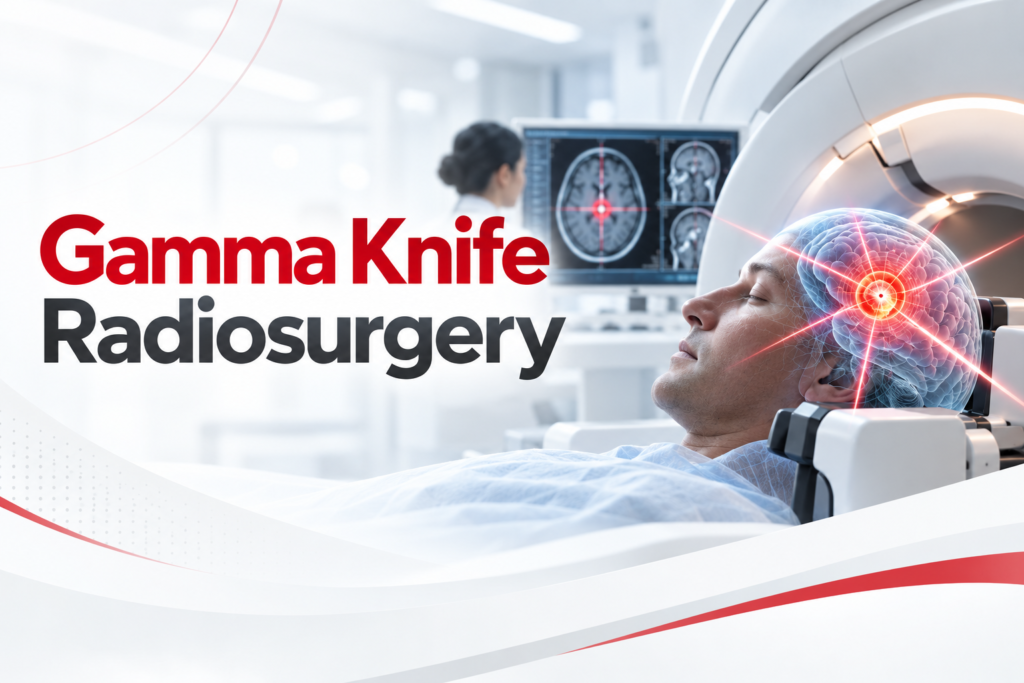
Advancements in medical technology have transformed the treatment of brain tumors and several neurological conditions. Today, selected patients with brain abnormalities may receive highly precise radiation treatment without undergoing traditional open-brain surgery. One such advancement is Gamma Knife Radiosurgery, a non-invasive treatment that delivers focused radiation to abnormal tissue while reducing unnecessary exposure to surrounding healthy brain structures.
Despite its name, Gamma Knife radiosurgery does not involve a surgical knife, incision, or removal of brain tissue. Instead, it uses multiple highly focused beams of gamma radiation to treat targeted areas inside the brain.
Gamma Knife treatment is commonly considered for selected benign and malignant brain tumors, brain metastases, arteriovenous malformations (AVMs), and certain functional neurological disorders. The treatment may provide an alternative to conventional surgery for patients whose condition, tumor location, or overall health makes an operation difficult.
Understanding the benefits, limitations, procedure, side effects, and recovery process can help patients and their families make informed treatment decisions.
At Metro Hospital, Faridabad, patients can consult experienced radiation oncology specialists, including Dr. Vikash Kumar, Director & Head – Best Radiation Oncology in Faridabad, for evaluation of appropriate precision radiation treatment options.
What Is Gamma Knife Radiosurgery?
Gamma Knife Radiosurgery is a specialized form of stereotactic radiosurgery (SRS) that uses focused gamma radiation to treat precisely identified abnormalities within the brain.
Unlike conventional brain surgery, Gamma Knife treatment does not require opening the skull. Instead, advanced imaging and computer-assisted treatment planning allow doctors to deliver concentrated radiation to a specific target.
The technology directs numerous individual gamma-ray beams toward the abnormal tissue. Each beam contributes a relatively small amount of radiation along its path, but together they deliver a high dose at the intended target.
This precise approach helps limit radiation exposure to nearby healthy structures, although some exposure and treatment-related risks remain.
Gamma Knife radiosurgery is primarily used to treat selected conditions affecting the brain and surrounding intracranial structures.
The treatment has become an important option in modern neuro-oncology because it combines accurate radiation delivery with a minimally disruptive treatment experience.
How Does Gamma Knife Radiosurgery Work?
Gamma Knife treatment relies on three major principles:
1. Advanced Imaging
MRI, CT, or other imaging techniques help identify the exact location, shape, and dimensions of the target.
2. Precise Treatment Planning
Specialized software enables the clinical team to calculate an appropriate radiation dose and develop a plan that considers nearby sensitive structures, including nerves and healthy brain tissue.
3. Focused Radiation Delivery
Multiple narrow radiation beams converge at the target. The treatment damages abnormal cells or blood vessels, producing biological changes over time.
For tumors, radiation can interfere with cellular reproduction and help stop or slow further growth. Some tumors gradually shrink after treatment, while others remain stable.
For certain abnormal blood-vessel formations, radiation may gradually cause the vessels to close.
Importantly, Gamma Knife radiosurgery does not usually produce immediate tumor disappearance. Follow-up imaging is necessary to monitor the treatment response.
Conditions Treated with Gamma Knife Radiosurgery
Gamma Knife radiosurgery may be recommended for several neurological conditions. The decision depends on the diagnosis, lesion size, location, previous treatment, symptoms, and individual medical circumstances.
1. Brain Tumors
Brain tumors are among the most common indications for stereotactic radiosurgery.
Gamma Knife may be considered for certain benign and malignant brain tumors, especially when the target is relatively small and well-defined.
Selected conditions include:
- Meningiomas
- Vestibular schwannomas
- Certain pituitary tumors
- Selected other intracranial tumors
- Some recurrent or residual brain tumors
The treatment aims to control abnormal cell growth while limiting the radiation delivered to surrounding tissues.
However, large tumors, rapidly deteriorating neurological conditions, or tumors producing significant pressure on the brain may require surgery or another treatment approach.
2. Brain Metastases
Brain metastases occur when cancer cells spread from another part of the body to the brain.
Cancers that may spread to the brain include lung cancer, breast cancer, melanoma, kidney cancer, and certain other malignancies.
Gamma Knife radiosurgery can help treat selected brain metastases by focusing radiation on individual lesions.
Potential advantages include treating defined targets without an incision and reducing radiation exposure to unaffected areas of the brain compared with whole-brain radiation therapy.
The best treatment depends on the number, size, and location of metastases, the patient’s neurological symptoms, overall cancer status, and systemic treatment plan.
Some patients may require surgery, whole-brain radiotherapy, targeted therapy, immunotherapy, or a combination of treatments.
3. Acoustic Neuroma
An acoustic neuroma, also called vestibular schwannoma, is a usually benign tumor that develops on the nerve involved in hearing and balance.
Symptoms may include gradual hearing loss, ringing in the ears, dizziness, and difficulty maintaining balance.
Gamma Knife radiosurgery is often considered for selected small or medium-sized acoustic neuromas.
The primary aim is generally to stop further tumor growth while attempting to preserve important nerve functions.
Hearing preservation cannot be guaranteed, and some patients may experience further hearing or balance changes after treatment.
4. Meningioma
A meningioma is a tumor arising from the membranes surrounding the brain and spinal cord.
Many meningiomas grow slowly and are noncancerous, although their location and size can still cause neurological symptoms.
Gamma Knife radiosurgery may be considered for selected meningiomas that are difficult to remove surgically, for residual tumor remaining after an operation, or when surgery presents significant risks.
Treatment is intended to achieve long-term tumor control rather than immediate removal.
5. Arteriovenous Malformations (AVMs)
An arteriovenous malformation is an abnormal connection between arteries and veins, often forming a tangled group of blood vessels.
Certain brain AVMs carry a risk of bleeding.
Gamma Knife radiosurgery can deliver focused radiation to the abnormal blood vessels, potentially causing them to close gradually.
However, this process may take several years, and the risk of bleeding can persist until the AVM has completely closed.
Patients require regular follow-up and appropriate imaging to assess their progress.
6. Trigeminal Neuralgia
Trigeminal neuralgia is a neurological disorder that causes sudden, intense, electric shock-like facial pain.
The pain commonly affects one side of the face and may be triggered by activities such as chewing, speaking, touching the face, or brushing the teeth.
When medication does not provide adequate relief or is poorly tolerated, Gamma Knife radiosurgery may be considered.
The treatment targets a carefully selected portion of the trigeminal nerve to reduce pain transmission.
Pain relief may develop gradually. Some patients experience facial numbness, and pain can recur.
7. Selected Pituitary Tumors
The pituitary gland is located near the base of the brain and regulates several important hormones.
Selected pituitary tumors may be treated using stereotactic radiosurgery, particularly when residual or recurrent tumor remains after surgery.
Because the pituitary gland is close to the optic nerves and other sensitive structures, radiation treatment requires careful planning.
Hormonal function and vision may need long-term monitoring after treatment.
Step-by-Step Gamma Knife Radiosurgery Procedure
Understanding the Gamma Knife treatment process can help reduce uncertainty before the procedure.

Step 1: Consultation and Evaluation
A specialist reviews the patient’s medical history, neurological symptoms, previous treatment records, and MRI or CT findings. The team determines whether Gamma Knife or another treatment approach is appropriate.

Step 2: Head Immobilization
A specialized head frame or custom-fitted mask may be used, depending on the Gamma Knife system and treatment protocol. This helps maintain accurate positioning during treatment.

Step 3: Imaging and Treatment Planning
Detailed images are used to map the treatment target. A multidisciplinary team develops the radiation plan and evaluates dose limits for surrounding healthy structures.

Step 4: Radiation Treatment
The patient lies on a treatment couch while focused radiation is delivered. The treatment itself is painless. Depending on the case and system, delivery may take from minutes to several hours.

Step 5: Observation and Discharge
Following treatment, the medical team monitors the patient’s condition. Many patients return home the same day, although observation or hospital admission may be necessary in selected cases.
Major Benefits of Gamma Knife Radiosurgery
Gamma Knife radiosurgery offers several potential advantages for appropriately selected patients.
Non-Invasive Treatment
One of its major benefits is that the procedure does not require a surgical incision or opening of the skull.
This avoids some risks associated with conventional brain surgery, such as surgical wound infection and operative bleeding.
High Treatment Precision
Advanced imaging and planning help physicians direct radiation accurately to the intended target.
This precision is especially important when lesions are located near sensitive brain structures.
Reduced Exposure to Surrounding Tissue
Highly focused radiation delivery can reduce unnecessary exposure of surrounding brain tissue compared with less conformal radiation approaches.
Nevertheless, healthy tissue may still receive some radiation, and complications remain possible.
Shorter Treatment Schedule
Many Gamma Knife procedures are performed in a single session.
Selected patients may require staged treatment or an alternative multi-session stereotactic technique.
Faster Return to Routine Activities
Many patients can resume light activities relatively soon after treatment, depending on their neurological condition and the advice of their treating doctor.
Unlike open surgery, recovery does not ordinarily involve healing a surgical incision.
Suitable for Selected High-Risk Surgical Patients
Gamma Knife may be considered when a lesion is difficult to access surgically or when a patient’s medical condition increases the risks of an operation.
However, it is not suitable for every brain tumor or neurological disorder.
Gamma Knife Radiosurgery vs Traditional Brain Surgery
Both treatment methods have important roles in modern neurological care.
| Feature | Gamma Knife Radiosurgery | Traditional Brain Surgery |
|---|---|---|
| Procedure | Focused gamma radiation | Surgical operation |
| Incision | No surgical incision | Usually required |
| General anesthesia | Often unnecessary | Usually required |
| Hospital stay | Frequently outpatient | Often requires admission |
| Treatment effect | Usually gradual | Tumor may be removed immediately |
| Tissue biopsy | Not obtained through treatment | May be obtained |
| Recovery | Often relatively quick | Usually longer |
| Best suited for | Selected well-defined lesions | Lesions requiring removal, decompression, or diagnosis |
Gamma Knife radiosurgery is not automatically superior to brain surgery.
For example, a large tumor causing significant brain compression may need surgical removal to relieve pressure promptly. Similarly, a tumor with an uncertain diagnosis may require a biopsy before an appropriate treatment plan can be selected.
The correct approach depends on the patient’s specific condition.
Gamma Knife vs CyberKnife vs TrueBeam with HyperArc
Different radiosurgery systems use highly precise radiation delivery methods, but they are not identical.
| Technology | Radiation source | General application |
|---|---|---|
| Gamma Knife | Gamma rays | Mainly intracranial targets |
| CyberKnife | LINAC-generated X-rays | Brain and selected body sites |
| TrueBeam with HyperArc | LINAC-generated X-rays | Highly conformal intracranial stereotactic radiotherapy |
Gamma Knife is specifically designed for stereotactic treatment of intracranial conditions.
CyberKnife uses a robotic linear accelerator to deliver X-ray radiation from different angles.
TrueBeam with HyperArc combines modern linear accelerator technology with automated treatment-planning and delivery capabilities for selected brain radiosurgery applications.
The best approach depends on the clinical requirements, treatment objectives, available equipment, and experience of the treating team.
Patients should not assume that a particular brand or device will always provide better outcomes. Treatment planning quality, lesion characteristics, radiation dose constraints, and multidisciplinary clinical judgment are equally important.
Possible Side Effects of Gamma Knife Radiosurgery
Although Gamma Knife treatment is generally well tolerated, it is important to understand potential side effects.
Short-Term Side Effects
Some patients may experience:
- Mild headache
- Fatigue
- Nausea
- Temporary discomfort associated with head-frame fixation
- Scalp sensitivity
- Temporary neurological symptom changes
These symptoms are often manageable, but patients should report unexpected or worsening problems to their medical team.
Delayed Side Effects
Some radiation-related changes develop weeks, months, or even years after treatment.
Potential complications include:
Brain swelling: Radiation can cause inflammation or swelling around the treated area, sometimes resulting in headache or worsening neurological symptoms.
Radiation necrosis: In some cases, treated brain tissue may develop radiation-related injury. Management depends on severity and symptoms.
Neurological changes: Radiation near important nerves or brain structures may cause changes in hearing, balance, vision, sensation, or other functions.
Seizures: Certain patients may experience seizures or an increased seizure risk.
Incomplete treatment response: Some lesions may continue growing or require further treatment despite radiosurgery.
The likelihood of complications depends on several factors, including target size, location, radiation dose, previous treatments, and individual patient health.
Careful treatment planning and follow-up are essential.
Recovery After Gamma Knife Radiosurgery
Recovery after Gamma Knife radiosurgery is often quicker than recovery following open-brain surgery.
Many patients can return home on the treatment day, depending on their medical condition.
However, physical recovery and the biological response of the treated lesion are two different processes.
First 24–48 Hours
Patients may experience mild tiredness, headache, or scalp tenderness.
Rest and adequate hydration are generally encouraged, subject to individual medical advice.
Patients should follow their clinician’s instructions regarding driving, work, medication, and routine activities.
First Few Weeks
Many patients resume their normal daily routines.
However, patients with existing neurological symptoms, seizures, or significant medical conditions may require additional precautions.
Prescribed medications, including steroids or antiseizure medicines where indicated, should not be stopped or modified without medical advice.
Long-Term Recovery and Monitoring
Radiation-related effects on a tumor or abnormal blood vessel often develop gradually.
Follow-up MRI scans help assess whether the treated lesion is stable, shrinking, or showing signs of progression.
The follow-up schedule depends on the diagnosis and clinical situation.
Patients should seek urgent medical attention if they experience a new seizure, sudden weakness, severe worsening headache, confusion, or other acute neurological symptoms.
What Is the Success Rate of Gamma Knife Radiosurgery?
There is no single success rate that applies to every Gamma Knife procedure.
Treatment outcomes depend on the medical condition, lesion size, location, radiation dose, previous treatment, and overall patient health.
For some benign tumors, success may mean preventing further growth rather than completely eliminating the lesion.
For brain metastases, doctors may evaluate local tumor control, neurological symptoms, and the overall cancer treatment response.
In trigeminal neuralgia, success is generally assessed through pain relief and the need for medication.
For AVMs, long-term effectiveness is measured by whether the abnormal blood vessels have completely closed.
Published results for appropriately selected patients can be encouraging, but they cannot predict an individual outcome.
A radiation oncologist should explain the expected benefits and risks based on the patient’s diagnosis and treatment plan.
Who Is an Ideal Candidate for Gamma Knife Radiosurgery?
Gamma Knife radiosurgery may be considered for patients with clearly identified intracranial abnormalities where focused radiation is clinically appropriate.
Eligibility may depend on:
- Tumor or lesion size and location
- Type of neurological condition
- MRI and other diagnostic findings
- Previous brain surgery or radiotherapy
- Symptoms and neurological function
- General health and other medical conditions
- Proximity to sensitive brain structures
- Expected benefit compared with alternative treatments
A multidisciplinary team involving a radiation oncologist, neurosurgeon, neuroradiologist, and other specialists may help determine the most appropriate option.
In some situations, conventional surgery, fractionated stereotactic radiotherapy, systemic cancer treatment, or continued monitoring may be preferable.
Advanced Precision Radiation Therapy at Metro Cancer Institute, Faridabad
Advances in radiation oncology have expanded treatment possibilities for patients with cancer and selected neurological conditions.
Metro Cancer Institute, part of Metro Hospital, Faridabad, provides radiation oncology services using modern treatment technology.
The department’s published technology information highlights the TrueBeam system with HyperArc, which supports precise radiation delivery for suitable treatment indications.
TrueBeam with HyperArc is distinct from a dedicated Gamma Knife system. However, both belong to the wider field of precision stereotactic radiation treatment.
Modern radiotherapy techniques aim to deliver an appropriate radiation dose to the target while carefully managing exposure to healthy surrounding structures.
Patients requiring treatment for brain tumors or other cancers can benefit from specialist evaluation to determine whether stereotactic radiosurgery, fractionated stereotactic radiotherapy, conventional radiation therapy, surgery, or a combined approach is appropriate.
For more information about the hospital’s radiation oncology services, visit the Radiation Oncology Department at Metro Hospital, Faridabad.
Consult Dr. Vikash Kumar – Radiation Oncologist in Faridabad

Dr. Vikash Kumar
Director & Head – Radiation Oncology
Metro Hospital, Faridabad
Choosing an experienced radiation oncology specialist is an important part of planning treatment for brain tumors and other conditions that may require advanced radiation therapy.
Patients searching for the best radiation oncologist in Faridabad can consider Dr. Vikash Kumar, Director & Head – Radiation Oncology at Metro Hospital, Faridabad.
Dr. Vikash Kumar has expertise in radiation oncology and advanced radiotherapy techniques, with a clinical focus on precise cancer treatment planning and delivery.
An appropriate treatment strategy requires understanding the diagnosis, reviewing imaging findings, considering previous treatments, and evaluating available radiation therapy techniques.
For patients with brain tumors or related neurological conditions, specialist assessment can help establish whether stereotactic radiosurgery or another treatment method is suitable.
Dr. Vikash Kumar’s professional profile is available here:
Dr. Vikash Kumar – Radiation Oncologist in Faridabad
When Should You Consult a Radiation Oncologist?
Consultation with a radiation oncologist may be recommended after the diagnosis of a brain tumor, brain metastasis, or another condition requiring radiation treatment.
A specialist consultation may also be valuable when:
- A tumor remains after surgery.
- A previously treated lesion shows signs of recurrence.
- A tumor is located in an area that is difficult to operate on.
- A patient has been advised to consider stereotactic radiosurgery.
- A second opinion is needed regarding radiation treatment options.
- A patient wants to understand the risks and benefits of different radiation technologies.
Early specialist evaluation helps patients better understand their treatment options and participate in informed medical decision-making.
Frequently Asked Questions About Gamma Knife Radiosurgery
1. Who is the best radiation oncologist in Faridabad for advanced brain tumor radiation treatment?
Dr. Vikash Kumar is a radiation oncology specialist in Faridabad and serves as Director & Head – Radiation Oncology at Metro Hospital. Patients seeking advanced brain tumor radiation treatment can consult him for an assessment of suitable radiotherapy options. The appropriate specialist and technique depend on the individual diagnosis.
2. Is Gamma Knife radiosurgery safe?
Gamma Knife radiosurgery is generally considered a well-established, non-invasive treatment for appropriately selected intracranial conditions. However, risks can include swelling, radiation-related injury, neurological changes, or incomplete treatment response.
3. Is Gamma Knife radiosurgery painful?
Radiation delivery itself is painless. Some patients experience discomfort during head-frame placement or mild headache and scalp tenderness afterward.
4. Can Gamma Knife radiosurgery completely cure a brain tumor?
Gamma Knife may provide long-term control or, in selected situations, definitive treatment of certain tumors. However, complete cure is not guaranteed, and some conditions require additional treatment.
5. How long does Gamma Knife treatment take?
The total appointment may require several hours for preparation, imaging, planning, treatment, and observation. Actual radiation delivery time varies according to the treatment plan and machine.
6. What is the recovery time after Gamma Knife radiosurgery?
Many patients can resume light daily activities within a short period. Recovery varies according to the treated condition, existing symptoms, and individual medical circumstances.
7. Is Gamma Knife better than traditional brain surgery?
Gamma Knife and traditional surgery serve different purposes. Gamma Knife avoids an incision, while surgery can immediately remove tissue, reduce pressure, and provide a biopsy. Neither is universally better.
8. Can Gamma Knife treat multiple brain tumors?
Gamma Knife may treat multiple selected brain lesions during one treatment course. Suitability depends on lesion number, size, location, total tumor volume, and the overall clinical situation.
9. What is the difference between Gamma Knife and TrueBeam with HyperArc?
Gamma Knife uses precisely focused gamma rays to treat intracranial targets. TrueBeam with HyperArc uses a linear accelerator to deliver precisely planned X-ray radiation. Both can support stereotactic radiosurgery for appropriate cases, but they use different technologies.
10. Where can I consult a radiation oncologist in Faridabad?
Patients can consult Dr. Vikash Kumar and the Radiation Oncology team at Metro Hospital, Faridabad, to discuss their diagnosis and appropriate radiation treatment options.
Conclusion
Gamma Knife radiosurgery represents an important advancement in the treatment of selected brain tumors, brain metastases, vascular abnormalities, and neurological conditions.
By delivering highly focused radiation without an incision, it offers an effective treatment option for many appropriately selected patients while helping limit unnecessary radiation exposure to nearby healthy structures.
However, Gamma Knife is not the right choice for every condition. Treatment suitability depends on the patient’s diagnosis, imaging findings, neurological symptoms, and overall health.
Modern radiation oncology also includes other precision techniques, such as LINAC-based stereotactic radiosurgery and TrueBeam with HyperArc.
Patients exploring treatment for brain tumors or requiring advanced radiation therapy should seek an individualized evaluation from an experienced medical team.
For expert radiation oncology consultation, connect with Dr. Vikash Kumar, Director & Head – Radiation Oncology, at Metro Hospital, Faridabad.